This information covers the intricacies of crypto pockets integration together with an indication of Moralis‘ Web3 Auth API. To show the ability of the most effective crypto pockets API, you’ll discover ways to create an easy internet app implementing three authentication strategies: MetaMask, WalletConnect, and Coinbase Pockets. If you wish to soar straight into the central a part of this tutorial, be happy to go on to the “How one can Add Crypto Pockets Integration” part! You may also entry the code instantly within the GitHub repository under:
Full Crypto Pockets Integration Documentation – https://github.com/MoralisWeb3/youtube-tutorials/tree/primary/MultipleWalletAuthentication
Web3 authentication is significant to Web3 growth, permitting customers to authenticate with their crypto wallets and offering a unified Web3 identification layer. This offers a extra seamless consumer expertise for your entire Web3 ecosystem and lowers onboarding friction, highlighting the necessity for accessible crypto pockets integration. Thus, with this being such a vital activity for blockchain growth, this text delves deep into crypto pockets integration and explores the most effective crypto pockets API!
As soon as you might be aware of crypto pockets integration and what it entails, we’ll present you how you can create a easy internet utility permitting customers to sign up with three totally different authentication strategies. Furthermore, due to Moralis’ Auth API, you’ll be able to create this utility in minutes! Nevertheless, this is just one of Moralis’ Web3 APIs, making Web3 growth extra accessible. For instance, you also needs to try Moralis’ Streams API, permitting you to stream blockchain information into the backend of your tasks by way of Web3 webhooks!
Nonetheless, in case you are in search of an accessible crypto pockets integration workflow, enroll with Moralis and achieve instant entry to the most effective crypto pockets API!
What’s a Cryptocurrency Pockets?
For anybody concerned about exploring the Web3 ecosystem or taking up blockchain growth, an preliminary step is buying a crypto pockets. Crypto wallets, additionally known as “Web3 wallets“, are sometimes considered easy digital wallets for holding digital property. Nevertheless, they’re greater than that and play a vital function in accessing varied Web3 ecosystems!
Regardless that there may be extra to cryptocurrency wallets than merely holding digital property, they nonetheless come outfitted with every little thing anticipated of an easy digital pockets. They supply the performance for storing digital property reminiscent of fungible tokens and NFTs (non-fungible tokens). Along with holding property, crypto wallets act as gateways to Web3’s in depth ecosystem of dapps. As such, they open the door to the crypto world, enabling you to work together with dapps, DeFi platforms, and so on., on varied blockchain networks.
Cryptocurrency wallets are sometimes ”non-custodial”, suggesting that you simply, because the pockets proprietor, can deal with property with out intermediaries. Consequently, you stay in full management of all digital property. Nevertheless, this unique entry places extra duty on you. As such, holding monitor of your personal keys and never sharing them with anybody is essential.
Since cryptocurrency wallets are gateways to the Web3 ecosystem, they’re important for the area’s unified identification layer. Moreover, dapps and different Web3 tasks implement authentication strategies based mostly on crypto wallets. This implies customers can sign up and authenticate their Web3 id utilizing one pockets on a number of platforms. This makes it simpler for customers to check out platforms and offers a extra seamless consumer expertise.
Furthermore, since Web3 wallets are important for the Web3 ecosystem, there’s a want for simple crypto pockets integration, which is the place crypto pockets integration APIs enter the image!
What’s a Crypto Pockets Integration API?
With a extra profound understanding of crypto wallets and their significance inside the Web3 area, it’s time to discover the intricacies of crypto pockets integration APIs. Nevertheless, earlier than we get to the specifics, we’ll reply the query, ”what are APIs?”.
API is an abbreviation for ”utility programming interface”, and they’re instruments facilitating the communication between software program techniques. Everytime you work together with an utility or dapp, the software program should transmit information to servers throughout the web. Then, the receiving finish should interpret the info and carry out a set of actions earlier than sending a response again. As such, your machine receives the response and analyzes it earlier than presenting it in a readable manner.

This course of above is usually facilitated by an API chargeable for transferring or translating directions for mutual understanding. Utilizing an API offers a listing of operations out there to builders through the growth course of. Consequently, builders don’t must construct every little thing from scratch, enabling a extra accessible developer expertise.
So, within the context of crypto pockets integration, APIs make it simpler for builders so as to add authentication strategies from varied crypto pockets suppliers to their Web3 tasks. So, when working with a crypto pockets integration API, you do not want to fret about constructing an underlying infrastructure when organising an authentication stream!
Now, earlier than we take a better take a look at the most effective crypto pockets API, let’s dive into the subsequent part and take a look at a few of the hottest crypto pockets suppliers!
Crypto Pockets Suppliers
This part explores a few of the most distinguished crypto pockets suppliers. Nevertheless, since there are lots of options available on the market, we’ll solely be capable of cowl a few of them. With that stated, this part focuses on MetaMask, Coinbase Pockets, and Belief Pockets!
- MetaMask – MetaMask is among the most well-established cryptocurrency wallets, with over 30 million trusted customers worldwide. Together with offering the standard features of a digital pockets, reminiscent of holding, sending, swapping property, and so on., MetaMask acts as a gateway to an intensive ecosystem of blockchain apps.

- Coinbase Pockets – Coinbase Pockets is a self-custody, multi-asset cryptocurrency pockets supporting lots of of hundreds of dapps and tokens. Furthermore, Coinbase Pockets offers every little thing you want in a Web3 pockets, such because the performance to commerce, purchase, and promote NFTs and cryptocurrencies.

- Belief Pockets – Belief Pockets is Binance’s official non-custodial, multi-crypto pockets. The pockets helps tens of millions of currencies and affords glorious options reminiscent of staking tokens, buying tokens, entry to dapps, and extra.

Now that we’ve got briefly coated some examples of the market’s most distinguished crypto pockets suppliers, it’s time to discover the most effective crypto pockets API: Moralis’ Auth API!
Exploring the Greatest Crypto Pockets API for Builders
Moralis’ Web3 Authentication API is the simplest manner so as to add crypto pockets integration to any dapp or Web3 venture. Whether or not you want to construct a brand new Web3 app, join your present Web2 consumer database with Web3Auth, or use authentication aggregators, Moralis’ crypto pockets integration API has you coated!
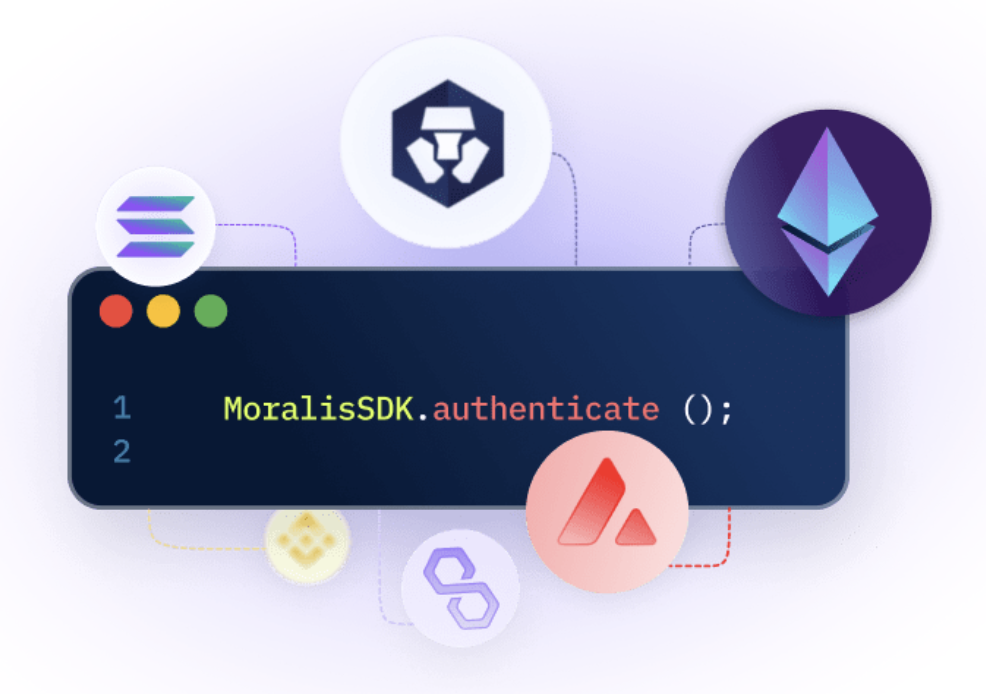
The Moralis crypto pockets integration API removes a few of the frequent hassles related to Web3 authentication. This consists of redirecting customers to third-party authentication interfaces, understanding Web3 authentication flows, studying how wallets signal and confirm messages, and so on. As such, when working with Moralis, it can save you an abundance of time by avoiding these redundant duties!
The Moralis Web3 Auth API provides a unified API for all authentication strategies, together with complete SDKs for simple crypto pockets integration. What’s extra, Moralis’ Web3 Auth API is repeatedly evolving. As such, in a fast-moving Web3 {industry}, the Web3 Auth API allows you to future-proof all authentication flows.
With a greater understanding of the most effective crypto pockets API, allow us to take a better take a look at how you should utilize this unimaginable software so as to add crypto pockets integration!
How one can Add Crypto Pockets Integration
Now that you’re extra aware of Moralis’ Auth API, it’s time to put it to make use of by displaying you how you can arrange crypto pockets integration. In doing so, you’ll discover ways to create an easy internet utility that enables customers to authenticate with three crypto pockets options: MetaMask, WalletConnect, and Coinbase Pockets.
You will see that two screenshots under of the dapp’s UI (consumer interface) as an instance what you might be working in the direction of. The primary one exhibits the login web page; in the meantime, the second picture exhibits the consumer web page that shows a consumer session containing an tackle, profile ID, and signature:
Login Web page:

Person Web page:

Creating the online app above and organising the crypto pockets integration is comparatively easy when utilizing the most effective crypto pockets API. To construct the app, you’ll be able to start by visiting the crypto pockets integration GitHub repository web page and cloning the venture to your native listing. You’ll be able to then set up the mandatory dependencies by working ”npm i” in your code editor’s terminal.
That’s principally it for organising the appliance. It is best to now be capable of begin the appliance on ”native host 3000” by working ”npm run dev” within the terminal.
Nevertheless, you would possibly nonetheless have questions concerning how the Auth API truly works. In that case, the next sections dive deeper into the appliance’s code. When you comply with alongside, you’ll be able to apply the identical rules so as to add crypto pockets integration to all future tasks!
Sadly, because the venture’s code is comparatively in depth, we are able to solely cowl elements of it. As such, the next sections concentrate on the important features for including crypto pockets integration.
Backend Code Walkthrough
To kick issues off, we’ll begin by masking the backend code of the online app. The ”api/auth” folder incorporates the backend code, which consists of two information: ”[…nextauth].js” and ”request-message.js”:
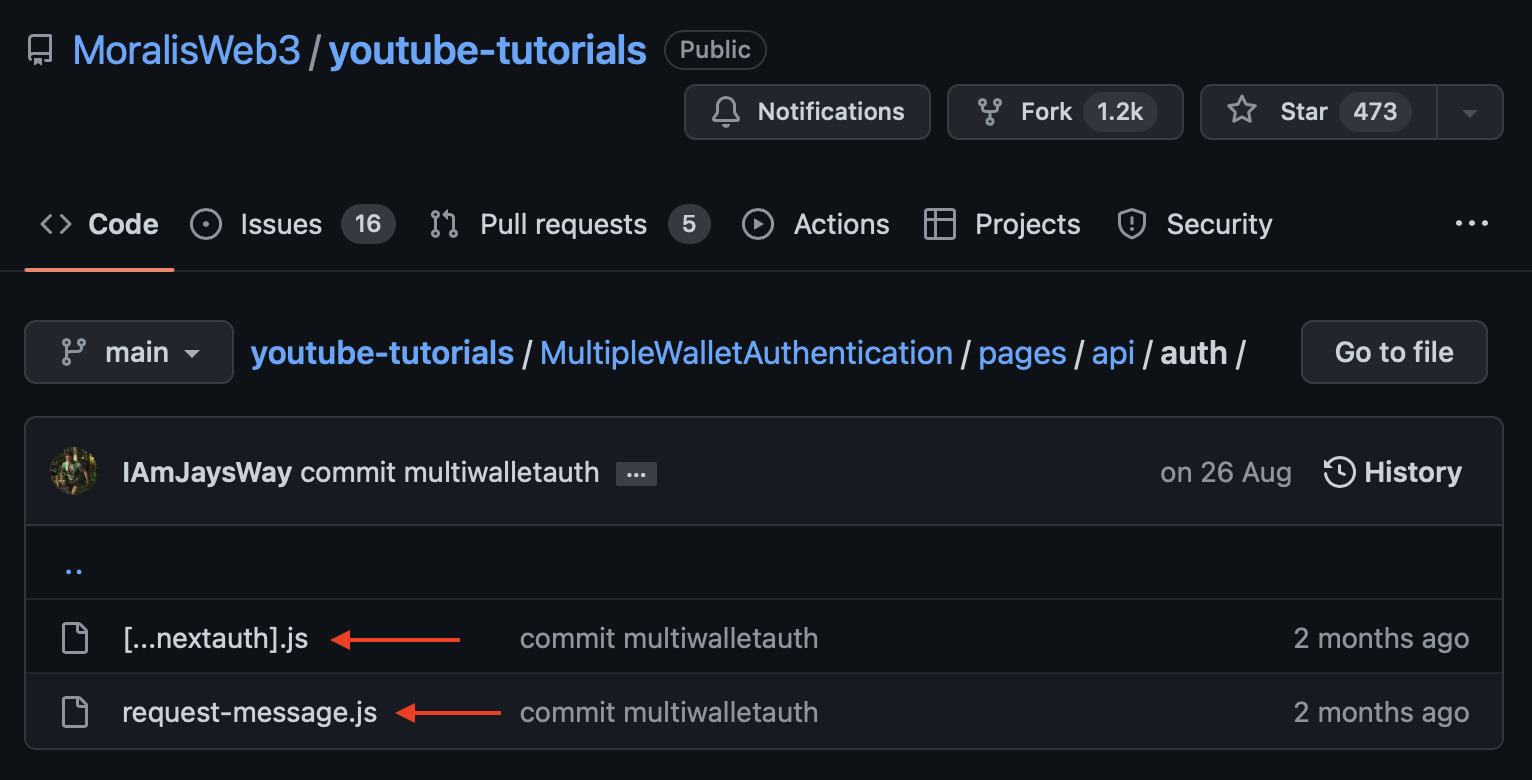
This part dissects every file individually to supply an in depth overview of the backend performance, beginning with ”request-message.js”. Moreover, this file incorporates the endpoint for requesting a message, and that is its whole code:
import Moralis from 'moralis';

const config = {
    area: course of.env.APP_DOMAIN,
    assertion: 'Net Login.',
    uri: course of.env.NEXTAUTH_URL,
    timeout: 60,
};

export default async operate handler(req, res) {
    const { tackle, chain, community } = req.physique;

    await Moralis.begin({ apiKey: course of.env.MORALIS_API_KEY });

    attempt {
        const message = await Moralis.Auth.requestMessage({
            tackle,
            chain,
            community,
            ...config,
        });

        res.standing(200).json(message);
    } catch (error) {
        res.standing(400).json({ error });
        console.error(error);
    }
}
The code above triggers Moralis’ ”Moralis.Auth.requestMessage()” operate with the tackle and chain ID of the consumer. The code moreover creates a brand new message despatched to the shopper facet. As quickly as a consumer indicators the message, a publish request is shipped, which takes us to the ”[…nextauth].js” code:
import CredentialsProvider from 'next-auth/suppliers/credentials';
import NextAuth from 'next-auth';
import Moralis from 'moralis';

export default NextAuth({
    suppliers: [
        CredentialsProvider({
            name: 'MoralisAuth',
            credentials: {
                message: {
                    label: 'Message',
                    type: 'text',
                    placeholder: '0x0',
                },
                signature: {
                    label: 'Signature',
                    type: 'text',
                    placeholder: '0x0',
                },
            },
              async authorize(credentials) {
                try {
                  // "message" and "signature" are needed for authorization
                  // we described them in "credentials" above
                  const { message, signature } = credentials;

                  await Moralis.start({ apiKey: process.env.MORALIS_API_KEY });

                  const { address, profileId } = (
                    await Moralis.Auth.verify({ message, signature, network: 'evm' })
                  ).raw;

                  const user = { address, profileId, signature };
                  // returning the user object and creating  a session
                  return user;
                } catch (e) {
                  console.error(e);
                  return null;
                }
              },
        }),
    ],
    // including consumer information to the consumer session object
    callbacks: {
        async jwt({ token, consumer }) {
            consumer && (token.consumer = consumer);
            return token;
        },
        async session({ session, token }) {
            session.consumer = token.consumer;
            return session;
        },
    },
});
Because the file’s code illustrates, it sends one other request to the ”Moralis.Auth.confirm()” operate with the response from the preliminary request. It is a message and the signature for singing the message on the shopper facet.
Subsequent up, the code generates a brand new ”consumer” object utilizing ”subsequent.auth” with a consumer tackle, profile ID, and signature. We then retailer the brand new consumer in an internet session in a JWT (JSON internet token).
That covers the important elements of the backend code. So, allow us to progress by transferring on to the frontend!
Frontend Code Walkthrough
The app’s frontend consists of a number of setup information reminiscent of ”_app.js”, ”index.js”, and so on. Nevertheless, for this tutorial, we’ll direct our consideration to the ”signin.js” file since that is the place you’ll discover many of the logic for the authentication strategies:
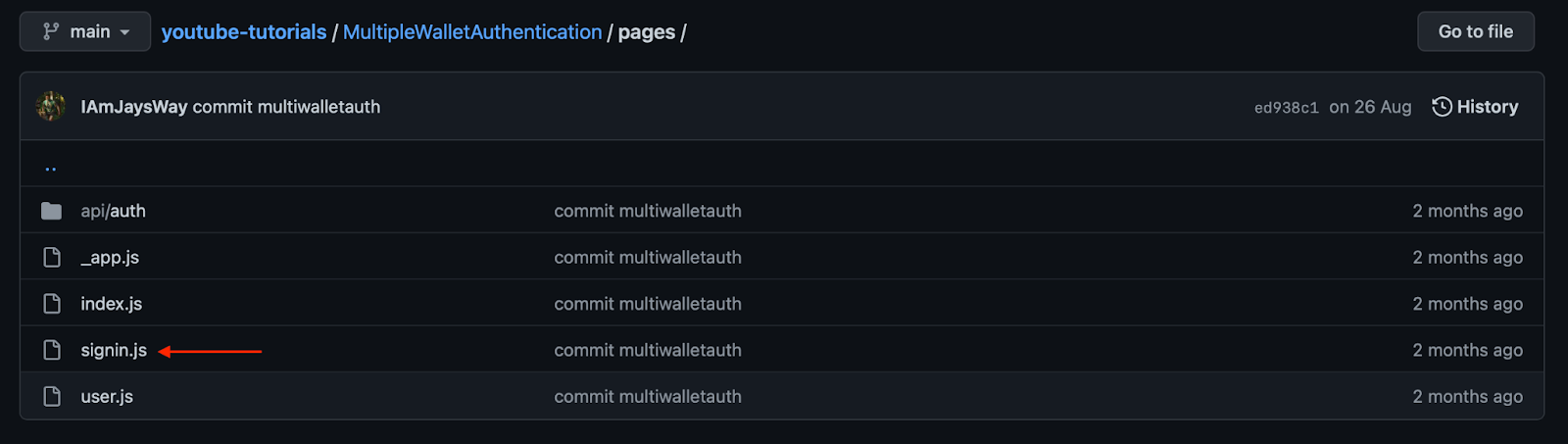
Initially, the file incorporates a couple of imports. On this case, we’re particularly within the connectors used to usher in the assorted authentication strategies utilizing wagmi. That is principally what you might be utilizing for the client-side Web3 connections:
import { signIn } from "next-auth/react";
import { useAccount, useConnect, useSignMessage, useDisconnect } from "wagmi";
import { useRouter } from "subsequent/router";
import { MetaMaskConnector } from "wagmi/connectors/metaMask";
import { CoinbaseWalletConnector } from "wagmi/connectors/coinbaseWallet";
import { WalletConnectConnector } from "wagmi/connectors/walletConnect";
import axios from "axios";
The “handleAuth(wal)” Operate
After the mandatory imports, we’ll discover the “handleAuth(wal)” operate. This operate is chargeable for connecting the totally different pockets connectors. The ”wal” parameter that the operate takes as an argument specifies which different is for use. Nonetheless, earlier than the connections are established, the code creates a ”userData” object which shops details about the customers. Here’s what the preliminary a part of the operate seems like:
 const handleAuth = async (wal) => {
    if (isConnected) {
      await disconnectAsync();
    }

    console.log("Join To Web site By way of Pockets");

    const userData = { community: "evm" };
Subsequent up, the operate consists of three ”if” statements for the three options used on this tutorial:
 if (wal === "meta") {
      const { account, chain } = await connectAsync({
        connector: new MetaMaskConnector({}),
      });
      userData.tackle = account;
      userData.chain = chain.id;
    }

    if (wal === "coin") {
      const { account, chain } = await connectAsync({
        connector: new CoinbaseWalletConnector({}),
      });
      userData.tackle = account;
      userData.chain = chain.id;
    }

    if (wal === "wal") {
      const { account, chain } = await connectAsync({
        connector: new WalletConnectConnector({ choices: { qrcode: true } }),
      });
      userData.tackle = account;
      userData.chain = chain.id;
    }
Allow us to break down the primary assertion for example. The primary ”if (wal === ”meta”)” assertion specifies that ”MetaMaskConnector” will likely be used because the authentication technique. As soon as the consumer authenticates, the code achieve entry to the consumer’s pockets tackle and chain ID, that are added to the ”userData” object.
This data is used to ship a publish request to Moralis’ Auth API:
console.log("Sending Linked Account and Chain ID to Moralis Auth API");

    const { information } = await axios.publish("/api/auth/request-message", userData, {
      headers: {
        "Content material-Kind": "utility/json",
      },
    });
With the message at hand, the code makes use of wagmi as soon as extra to signal the message, ship a last publish request to Moralis for verification, and create the consumer JWT that’s pushed to the consumer web page:
console.log("Acquired Signature Request From Moralis Auth API");

    const message = information.message;

    const signature = await signMessageAsync({ message });

    console.log("Succesful Signal In, Redirecting to Person Web page");

    const { url } = await signIn("credentials", {
      message,
      signature,
      redirect: false,
      callbackUrl: "/consumer",
    });

    push(url);
Lastly, the code moreover consists of three buttons related to the assorted options. Every button runs the “handleAuth(wal)” operate with totally different parameters comparable to the ”if” statements beforehand specified:
<div>
      <h3>Web3 Authentication</h3>
      <button onClick={() => handleAuth("meta")}>
        Authenticate by way of Metamask
      </button>
      <br />
      <button onClick={() => handleAuth("coin")}>
        Authenticate by way of Coinbase
      </button>
      <br/>
      <button onClick={() => handleAuth("wal")}>
        Authenticate by way of Pockets Join
      </button>
    </div>
Finally, that is what the ultimate ”signin.js” file seems like:
import { signIn } from "next-auth/react";
import { useAccount, useConnect, useSignMessage, useDisconnect } from "wagmi";
import { useRouter } from "subsequent/router";
import { MetaMaskConnector } from "wagmi/connectors/metaMask";
import { CoinbaseWalletConnector } from "wagmi/connectors/coinbaseWallet";
import { WalletConnectConnector } from "wagmi/connectors/walletConnect";
import axios from "axios";

operate SignIn() {
  const { connectAsync } = useConnect();
  const { disconnectAsync } = useDisconnect();
  const { isConnected } = useAccount();
  const { signMessageAsync } = useSignMessage();
  const { push } = useRouter();

  const handleAuth = async (wal) => {
    if (isConnected) {
      await disconnectAsync();
    }

    console.log("Join To Web site By way of Pockets");

    const userData = { community: "evm" };

    if (wal === "meta") {
      const { account, chain } = await connectAsync({
        connector: new MetaMaskConnector({}),
      });
      userData.tackle = account;
      userData.chain = chain.id;
    }

    if (wal === "coin") {
      const { account, chain } = await connectAsync({
        connector: new CoinbaseWalletConnector({}),
      });
      userData.tackle = account;
      userData.chain = chain.id;
    }

    if (wal === "wal") {
      const { account, chain } = await connectAsync({
        connector: new WalletConnectConnector({ choices: { qrcode: true } }),
      });
      userData.tackle = account;
      userData.chain = chain.id;
    }

    console.log("Sending Linked Account and Chain ID to Moralis Auth API");

    const { information } = await axios.publish("/api/auth/request-message", userData, {
      headers: {
        "	": "utility/json",
      },
    });

    console.log("Acquired Signature Request From Moralis Auth API");

    const message = information.message;

    const signature = await signMessageAsync({ message });

    console.log("Succesful Signal In, Redirecting to Person Web page");

    const { url } = await signIn("credentials", {
      message,
      signature,
      redirect: false,
      callbackUrl: "/consumer",
    });

    push(url);
  };

  return (
    <div>
      <h3>Web3 Authentication</h3>
      <button onClick={() => handleAuth("meta")}>
        Authenticate by way of Metamask
      </button>
      <br />
      <button onClick={() => handleAuth("coin")}>
        Authenticate by way of Coinbase
      </button>
      <br/>
      <button onClick={() => handleAuth("wal")}>
        Authenticate by way of Pockets Join
      </button>
    </div>
  );
}

export default SignIn;
That’s it for this ”Crypto Pockets Integration Utilizing the Greatest Crypto Pockets API” tutorial! When you have any additional questions concerning the code or need a extra detailed breakdown of the method of including a crypto pockets integration, try the Moralis YouTube video under!
Crypto Pockets Integration – Abstract
Web3 authentication is crucial to blockchain growth, permitting customers to sign up and authenticate themselves utilizing their Web3 wallets from varied crypto pockets suppliers. As such, Web3 builders are in want of straightforward crypto pockets integration to make their blockchain growth endeavors extra accessible, which is the place APIs enter the equation.
A crypto pockets integration API permits builders to shortly implement authentication strategies from varied crypto pockets suppliers. This text demonstrated the ability of Moralis’ Web3 Auth API – the most effective crypto pockets API – by displaying you how you can create an utility the place customers can sign up utilizing MetaMask, WalletConnect, or Coinbase Pockets. Furthermore, you can create this utility in document time due to Moralis’ capabilities!
When you discovered this tutorial useful and wish to try extra nice content material dropped at you by Moralis, tune in to Moralis’ Web3 weblog that includes distinctive Web3 growth content material. For instance, try our article on Dogechain or discover ways to add information to IPFS!
Furthermore, if you wish to turn into a more adept Web3 developer, take into account trying out Moralis Academy. The academy provides industry-leading blockchain programs for brand new and extra skilled builders. As an illustration, enroll within the ”Blockchain & Bitcoin 101” course to kickstart your Web3 developer journey.
Nonetheless, are you seeking to get into Web3 growth and wish to leverage the ability of blockchain expertise? In that case, enroll with Moralis right away and supercharge your Web3 tasks with entry to enterprise-grade growth instruments!

