
Balkrishna Doshi, some of the considerate and authentic architects of his technology and creator of a string of extremely admired neighborhood and academic buildings in India, has died, aged 95.
In 2018, Doshi grew to become the primary Indian architect to win the Pritzker Prize, and in 2022 he acquired the Royal Gold Medal of the Royal institute of British Structure (RIBA), in London. These awards, essentially the most valued in his career, marked Doshi’s contribution to the constructing of unbiased India’s establishments over seven many years, and the worldwide esteem wherein he was held as a champion of low-cost housing and people-centred structure; as an impressed educator of architects and planners; and for the worldwide imaginative and prescient he developed as a collaborator with the Swiss grasp Le Corbusier, with the good US modernist Louis Kahn and with lots of Japan’s most interesting late Twentieth-century architects.
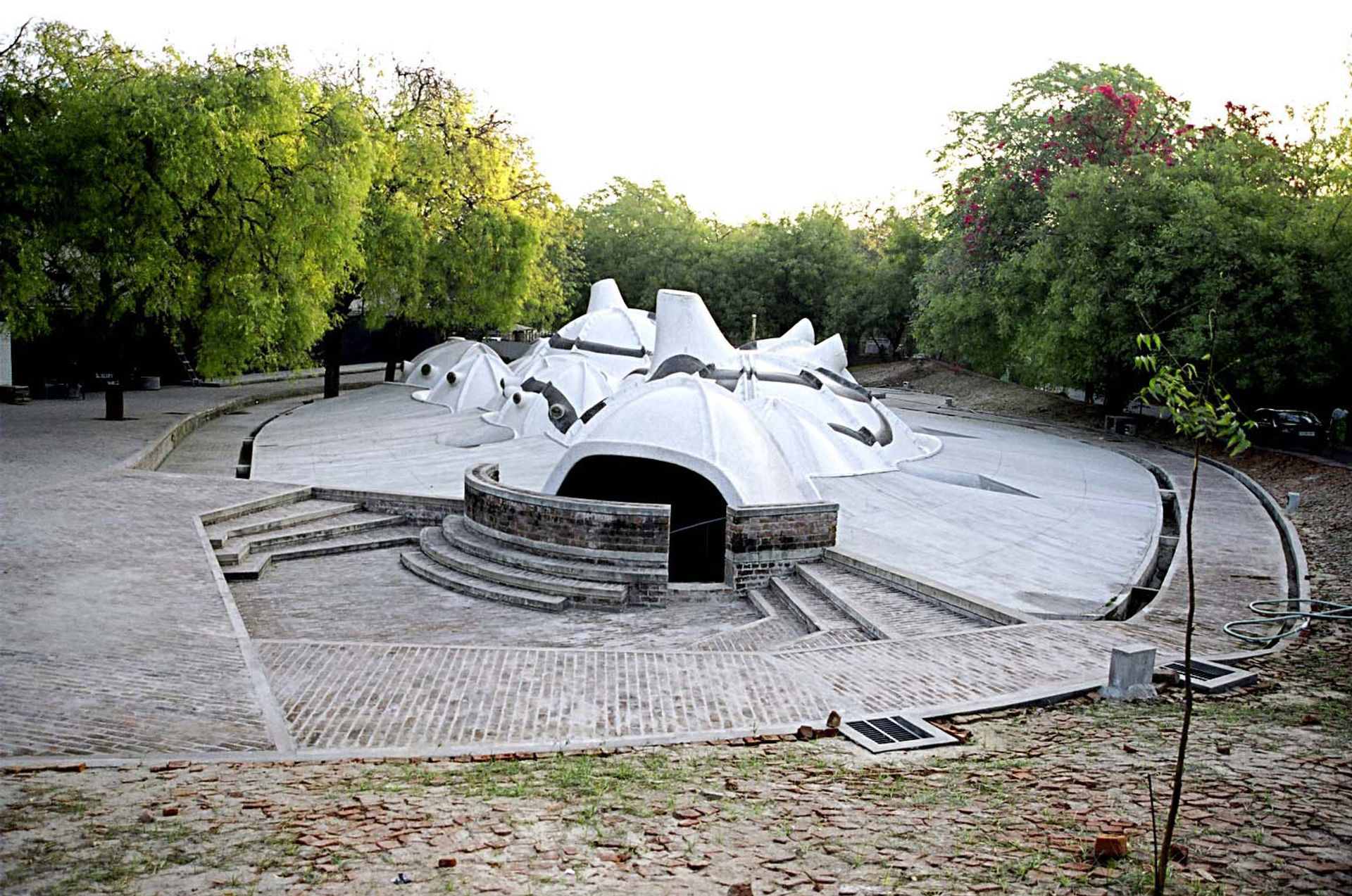
Amdavad ni Gufa (accomplished 1995), Ahmedabad, an underground gallery created by Doshi and the artist MF Husain Courtesy of Vastushilpa Basis (VSF)
Doshi additionally collaborated with main Indian artists, notably with M.F. Husain on Amdavad ni Gufa (accomplished 1995), a undertaking for a gallery in Ahmedabad—Doshi’s residence metropolis in Gujarat, western India—which developed right into a outstanding community-focused everlasting set up of Husain’s work, semi-submerged, with interlocking tortoise-like domes and a colour-infused cave-like inside, held up by Stonehenge-inspired tree trunks.
Doshi’s personal tremendous artwork apply—which Le Corbusier had inspired in Paris in 1951-54, along with his emphasis on sketching as a significant a part of his younger assistants’ skilled schooling—has come to the fore lately. Doshi’s work has featured at international artwork festivals together with Artwork Basel 2022—The Labyrinth of Desires, a present of his surrealist drawings, work and sculptures—Frieze London 2022 and, on the time of Doshi’s loss of life, at India Artwork Truthful 2023, in New Delhi. Roshini Vadehra, director of the Vadehra Gallery, in New Delhi, advised The Artwork Newspaper that the gallery is engaged on a monograph of Doshi’s tremendous artwork, that includes an interview with Doshi performed by Hans Ulrich Obrist, creative director of the Serpentine Galleries, London.
Two points of Doshi’s structure stand out: his concentrate on low-cost housing and his natural strategy to institutional or academic campuses, symbiotically tailored to the Indian local weather and ecology.
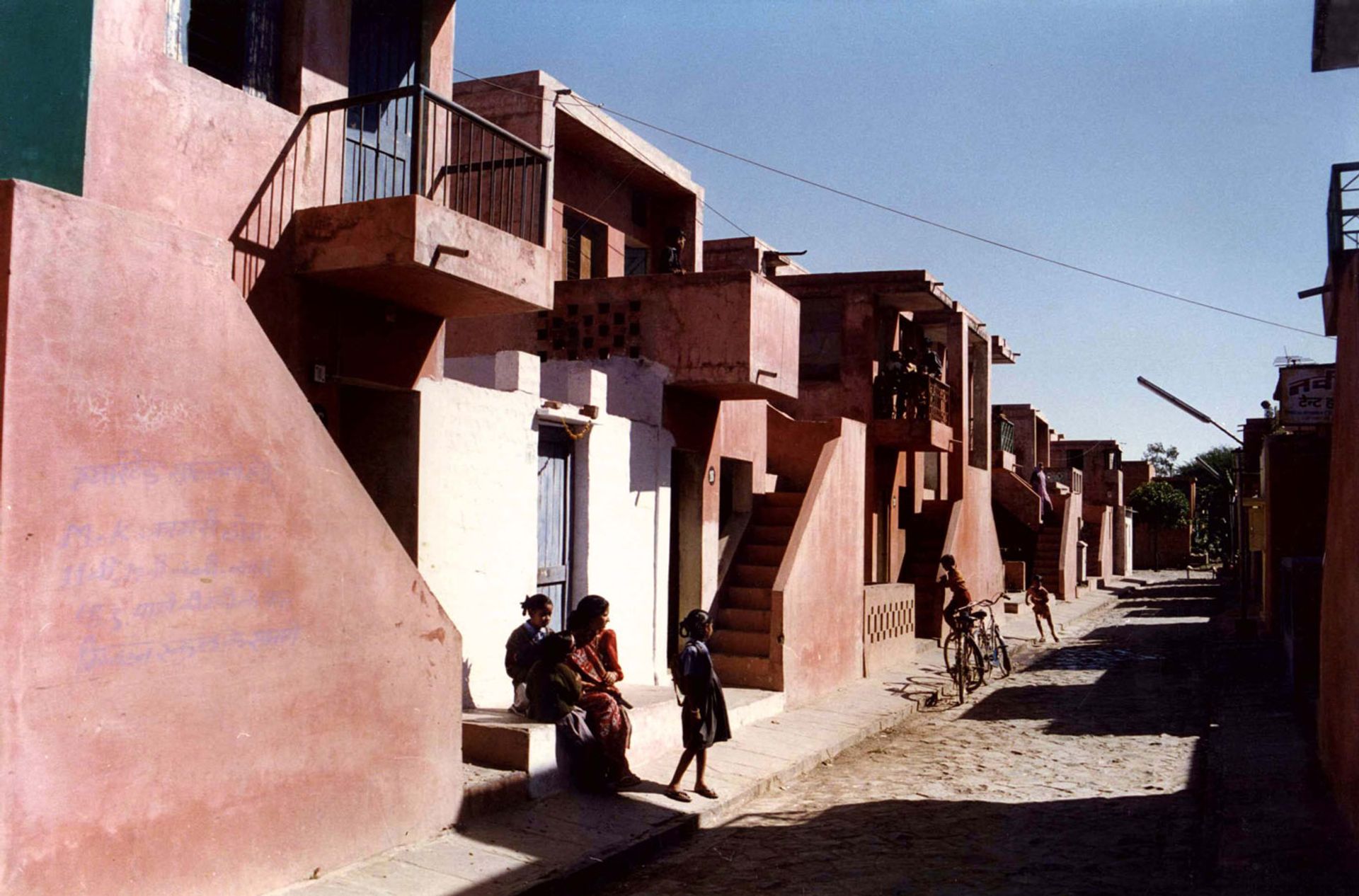
Doshi’s Aranya Low Price Housing scheme in Indore (accomplished 1989) Courtesy of Vastushilpa Basis (VSF)
His work on housing schemes for low-income households is typified by Life Insurance coverage Firm Housing, Ahmedabad (accomplished 1978)—a bunch of a number of hundred properties organized in 54 items, on a duplex mannequin, to encourage the blending of individuals from totally different revenue brackets—and Aranya Low Price Housing, in Indore, central India (accomplished 1989 and subsequently awarded the Aga Khan Award for Structure), the place low-income households have been supplied core parts to adapt to go well with their wants. Giving households this freedom, Doshi mentioned, taught him how a neighborhood works collectively.
Doshi’s strategy to campus-planning centered on engagement with local weather, with vegetation and areas for human interplay. It reached its apogee, with a synthesis of worldwide fashionable and native kinds, on the Indian Establishment of Administration (IIM) at Bangalore (accomplished 1983). The undertaking reveals his shut familiarity with Fatehpur Sikri—the supremely refined Sixteenth-century Mughal capital close to Agra, with its terraces, halls and pavilions—and the private affect of each Le Corbusier and Louis Kahn: particularly Kahn’s designs for IIM Ahmedabad (1962-74), the place Doshi was affiliate architect, and the place they took educating out of the classroom and into the campus’s plaza and hallways.
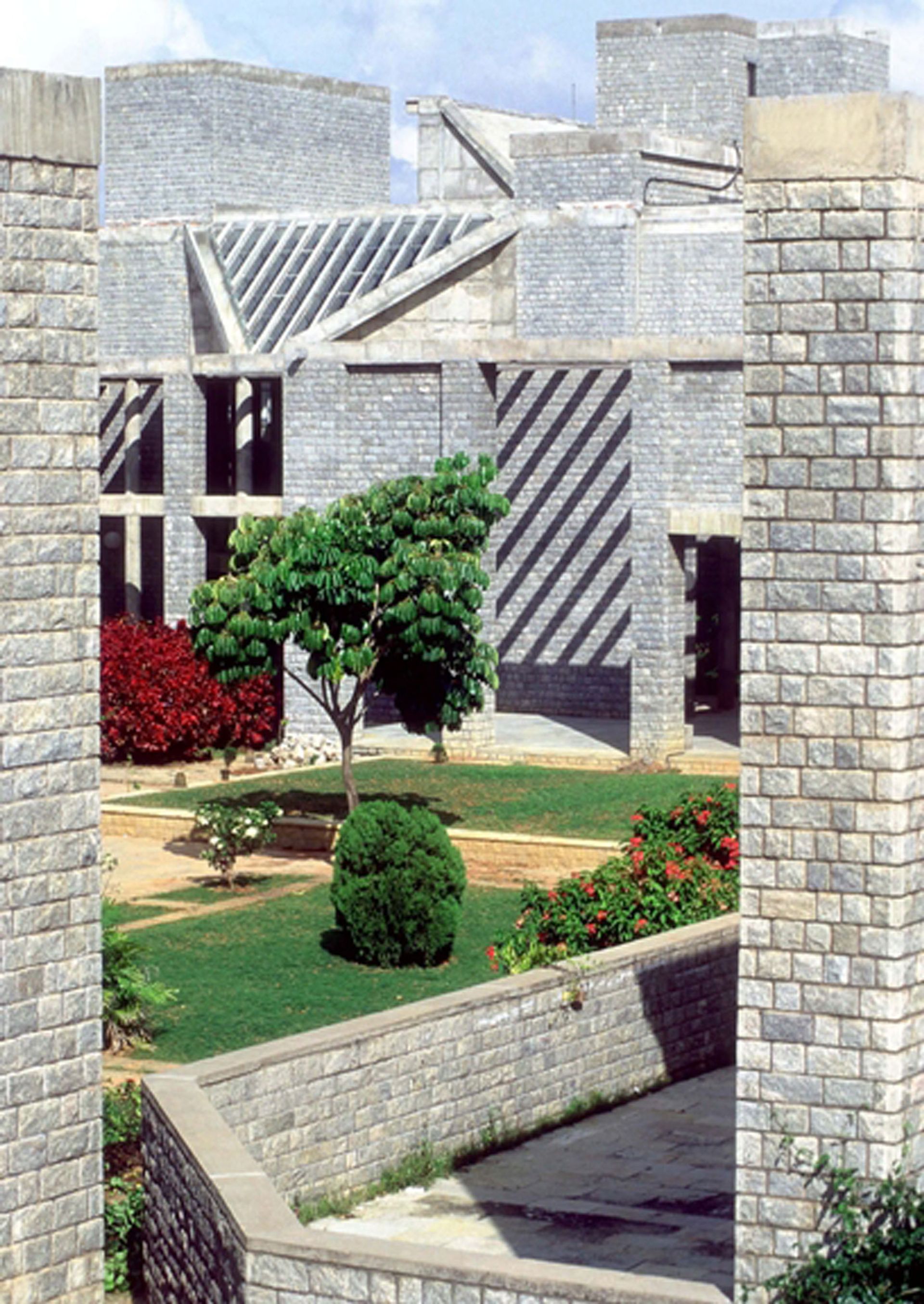
Doshi’s Indian Establishment of Administration (IIM), Bangalore (accomplished 1983) Courtesy of Vastushilpa Basis (VSF)
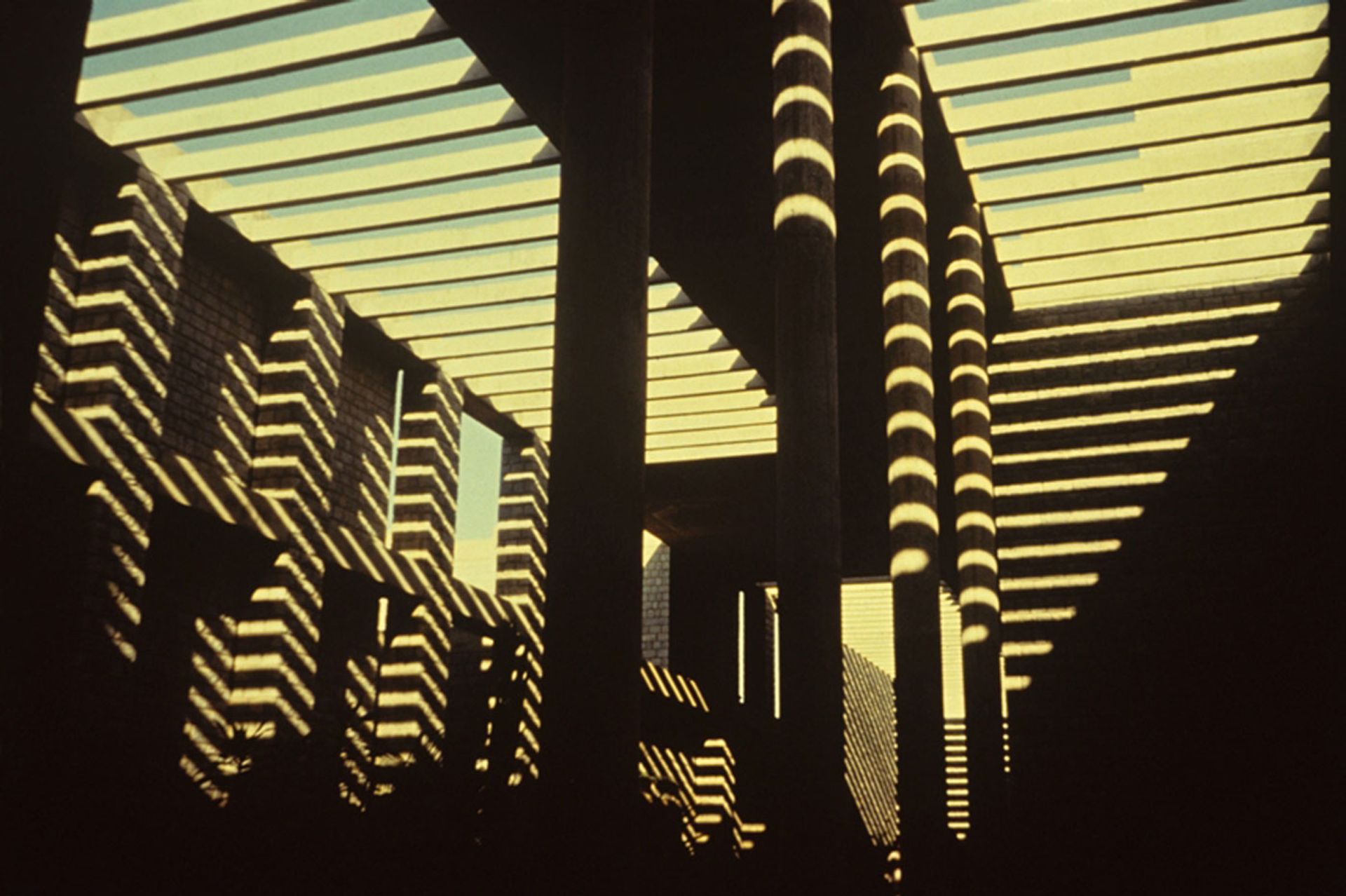
Doshi’s Indian Establishment of Administration (IIM), Bangalore (accomplished 1983) Courtesy of Vastushilpa Basis (VSF)
In 2021, the New York Instances rated Doshi’s IIM Bangalore as one of many “25 Most Important Works of Postwar Structure”, and the critic Nikil Saval described it then as “probably the greatest cases of a contemporary architect deferring to the panorama and to the tradition of a metropolis, in addition to to indigenous architectural traditions.”
Childhood in a multi-generational family
Balkrishna “BV” Doshi grew up within the metropolis of Pune, 100 miles inland from Mumbai, in a bustling family, typically 15 robust—”there have been widowers, middle-aged mother and father, newlyweds and adolescents”, he wrote in his autobiography Paths Uncharted (2019). His mom had died quickly after his delivery and his father, who was 75 on the time of Doshi’s delivery, was usually absent, busy along with his household furnishings enterprise and spiritual and social work. In Paths Uncharted, Doshi writes that he suspects that the absence of maternal love and the ”need to rediscover this intimacy gave rise to my behavior of scribbling no matter got here to my thoughts, proper from a really younger age”. These scribbles have been the beginnings of his life as an architect and tremendous artist, who drew and painted all his life.
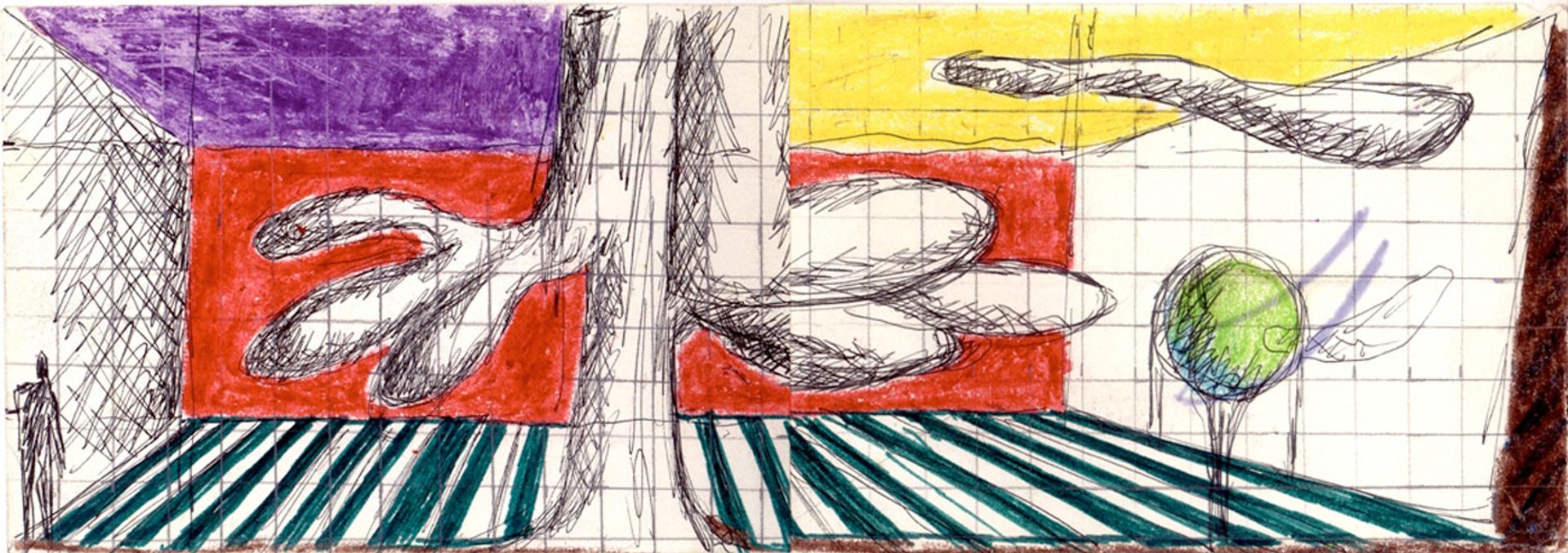
Doshi’s conceptual sketch for an inside at Premabhai Corridor, in Ahmedabad, c1956 Courtesy of Vastushilpa Basis (VSF)
Being frugal was “second nature” to Doshi: by household custom and thru the private instance of Mahatma Gandhi. “Being frugal and forgoing is the way in which I’ve lived all my life,” he writes in Paths Uncharted. “Frugal habits have allowed me to decide on what I need to do as a result of my wants are minimal.”
The primary, dramatic, demonstration of selecting what he needed to do, was to surrender his research on the JJ College in Mumbai and transfer to London in 1950, to finish his diploma in structure on the RIBA in London. There he gloried within the institute’s library, one thing that he recalled fondly when successful the RIBA’s Gold Medal 70 years later. However he gave up the RIBA when he met Germán Samper, a Colombian architect three years his senior—who later designed the spectacular Museum of Gold in Bogota (1963-68)—who inspired him to come back to work in Paris in 1951 in Le Corbusier’s studio, the place Samper was aiding Le Corbusier along with his metropolis plan for Bogotà. There Doshi learnt his commerce, engaged on the good Swiss-born architect’s Indian commissions, for Chandigarh—a whole new metropolis, the place Doshi labored as a senior undertaking architect—and Ahmedabad, the place he settled to supervise Le Corbusier’s tasks on website.
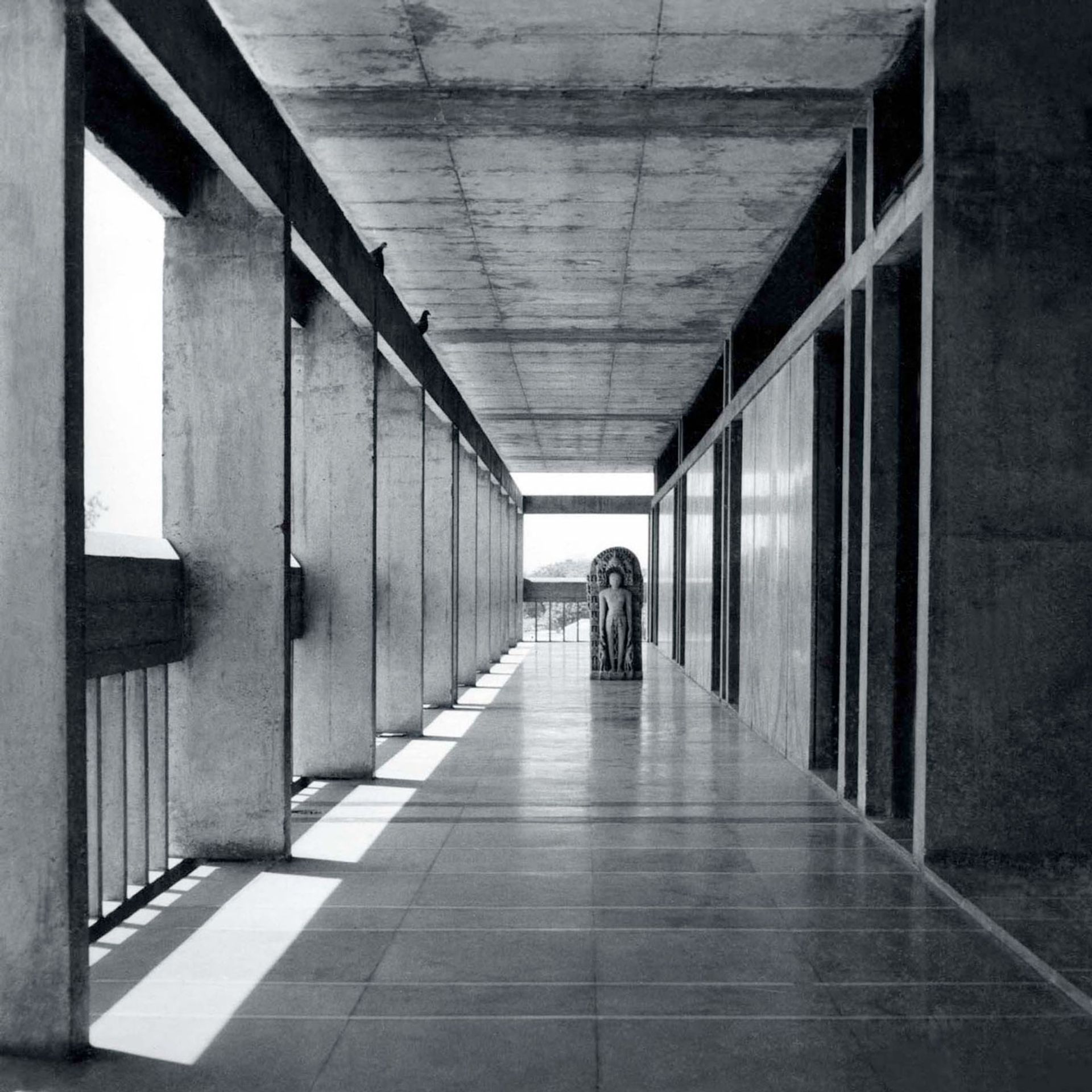
Doshi’s Institute of Indology, Ahmedabad (accomplished 1962) Courtesy of Vastushilpa Basis (VSF)
Doshi arrange his personal apply in 1956 in Ahmedabad, the place architects from abroad arrived on pilgrimage to admire “Corb’s” newest work. These included Kenzo Tange, one of many creators of contemporary Tokyo, who got here in 1957 with the structural engineer Yoshikatsu Tsuboi. Tange and Tsuboi talked to Doshi concerning the stadium they have been designing for the 1964 Olympics in Tokyo. Doshi, who was engaged on his first huge solo fee, for Premabhai Corridor arts centre in Outdated Ahmedabad, subsequently went to Tokyo for 4 months to finalise the design and structural drawings for that undertaking with Tsuboi. The affect of Tange’s contemporaneous work—the Kagawa Prefectural Authorities Workplace (accomplished 1958) and Kurashiki City Corridor (accomplished 1960)—is detectable in Doshi’s Institute of Indology in Ahmedabad (accomplished 1962), a pavilion raised on a plinth and designed to accommodate historic manuscripts.
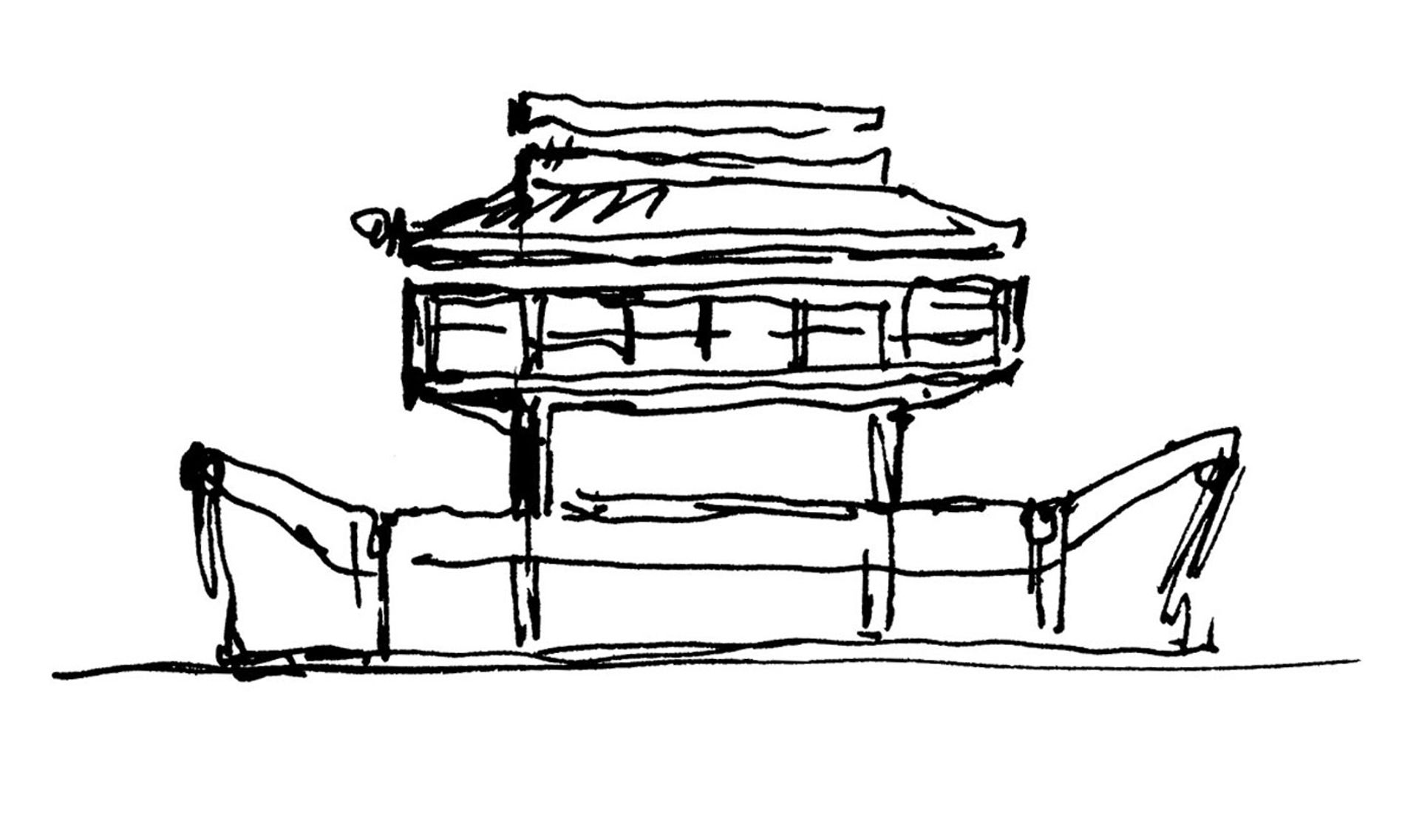
Balkrishna Doshi, sketch for Institute of Indology in Ahmedabad (accomplished 1962) Courtesy of Vastushilpa Basis (VSF)
In 1958, after his working sojourn in Japan, Doshi continued his globe-trotting schooling, with a go to to Taliesin West, the studio of the grand previous man of world structure, Frank Lloyd Wright. After which, whereas lecturing in the USA in 1961, he met Louis Kahn, the modernist magus of Philadelphia, who had not too long ago been commissioned to design a brand new Nationwide Meeting Constructing (1961-82) in Dhaka, East Pakistan (Bangladesh from 1971). Doshi invited Kahn to use—within the type of a letter to Doshi himself—to design the Indian Institute of Administration in Ahmedabad, which Kahn duly executed to nice acclaim with Kahn making annual visits to the location, till his premature loss of life in 1974. Kahn grew to become, after Le Corbusier, the second nice architectural guru in Doshi’s life. They taught him as a lot of the Classical previous, as of the current. Doshi mentioned that he would by no means have recognized the work of the Sixteenth-century grasp Andrea Palladio, and his seminal publications on structure, however for his two modernist gurus.
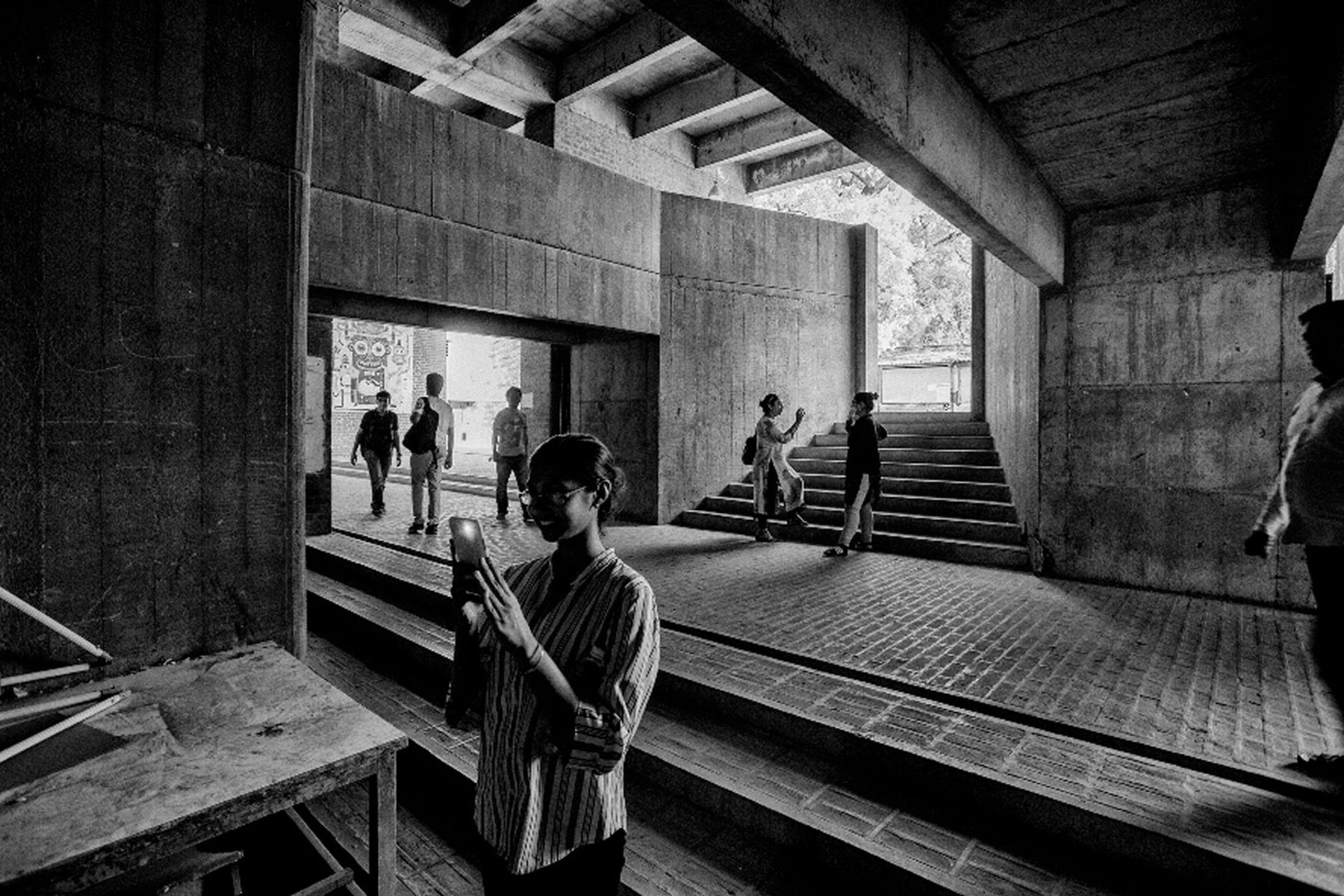
Doshi’s CEPT College, Ahmedabad, developed in phases over 46 years (1966-2012) Courtesy of Vastushilpa Basis (VSF)
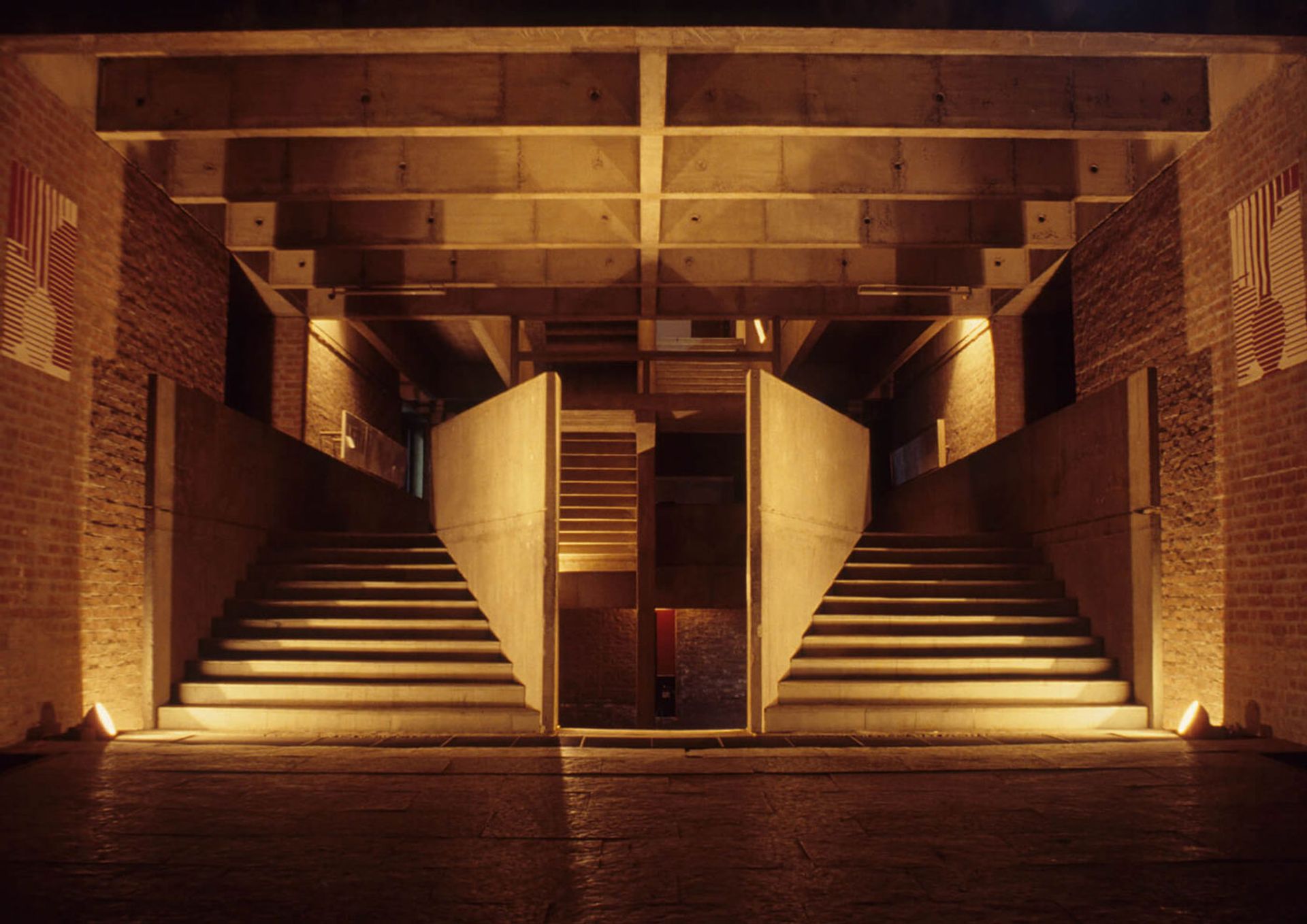
Doshi’s CEPT College, Ahmedabad (1966-2012) Courtesy of Vastushilpa Basis (VSF)
In his acceptance speech for the Pritzker Prize, Doshi paid tribute to the private steering he had acquired from Le Corbusier. “I used to be uncooked sufficient to be taught by him,” he mentioned. Le Corbusier had advised Doshi to reside a “disciplined lifetime of exactitude” and to “draw continually”. “His explaining and drawing taught me about construction, area and lightweight,” Doshi mentioned. “Whereas he was in Chandigarh he would draw animals and folks, go to temples and [he] learnt construction from cattle and buffalo … He mentioned you will need to have a pact with nature.”
An educator and perpetual scholar
Late in life, Doshi described himself as a perpetual scholar, and he had longed since proved himself to be an impressed instructor. In 1966 he based, and designed, the college of structure on the Centre for Environmental Planning and Expertise (now CEPT College), Ahmedabad, the place he taught for 45 years. The campus grew over the following 45 years, beginning with the College of Structure, earlier than including a college of planning (1970), a visible arts centre, faculties of constructing science and inside design and at last (in 2012) an exhibition gallery. “CEPT campus has develop into without delay a small campus and an enormous home,” Doshi mentioned in 2018. His intention, he mentioned, was to flee the shadow of Western faculties. “We needed to seek out our personal id.”
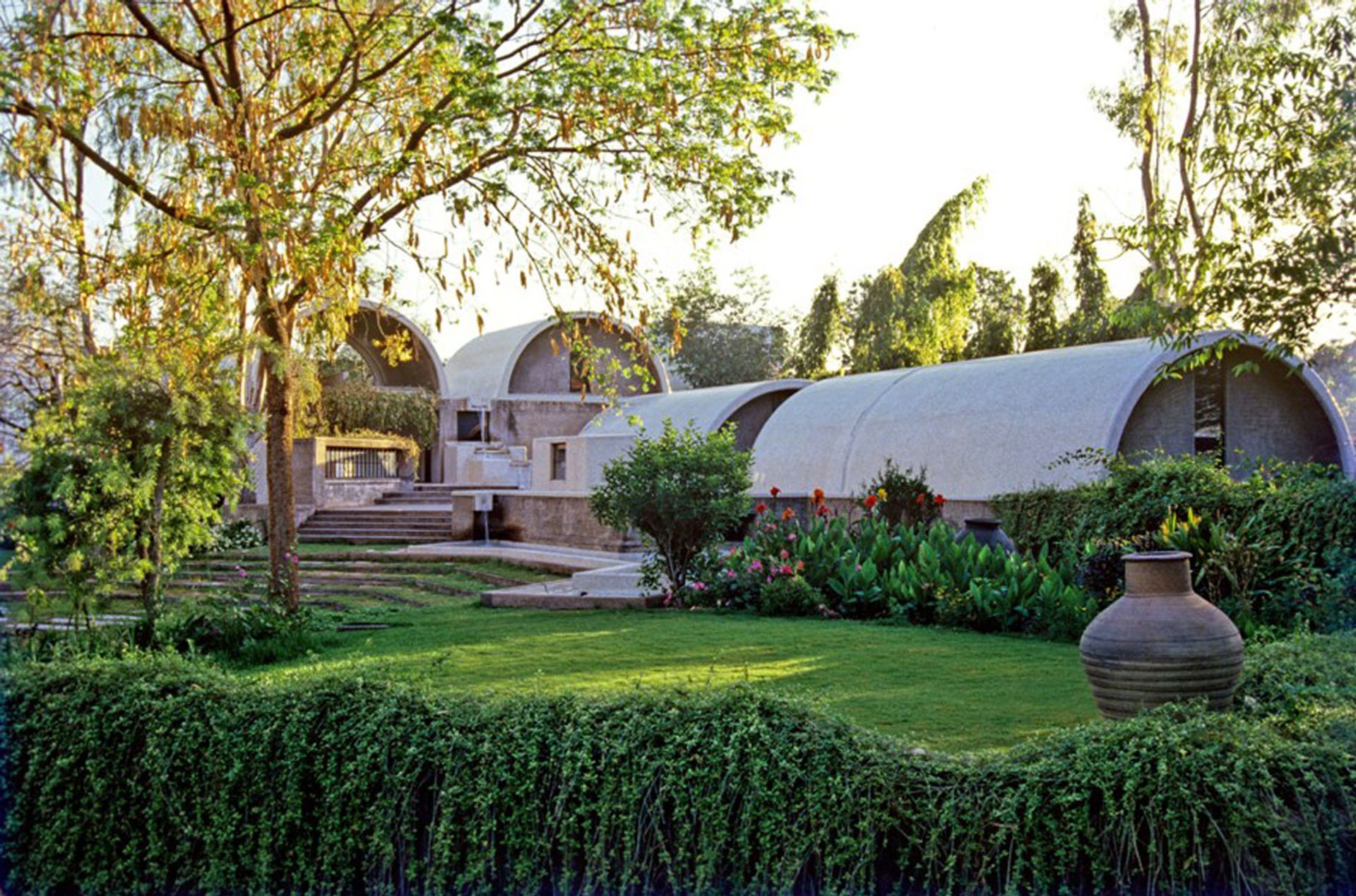
Sangath, the studio Doshi constructed for his architectural apply in Ahmedabad (accomplished 1981) Courtesy of Vastushilpa Basis (VSF)
In 1981, Doshi completed work on Sangath, in Ahmedabad, a brand new residence for his rising apply, whose title means “shifting collectively”. He needed it to be a studio “that denies what an workplace needs to be”. One the place the necessities for air flow demanded the spatial openness and fluidity that he dropped at his most interesting campus work. Considered one of his inspirations for creating this collective strategy, this working collectively, was a sculptor’s studio he had encountered in Egypt, by the pyramids at Giza, which housed a craft centre, a pottery studio and a carpet-making space.
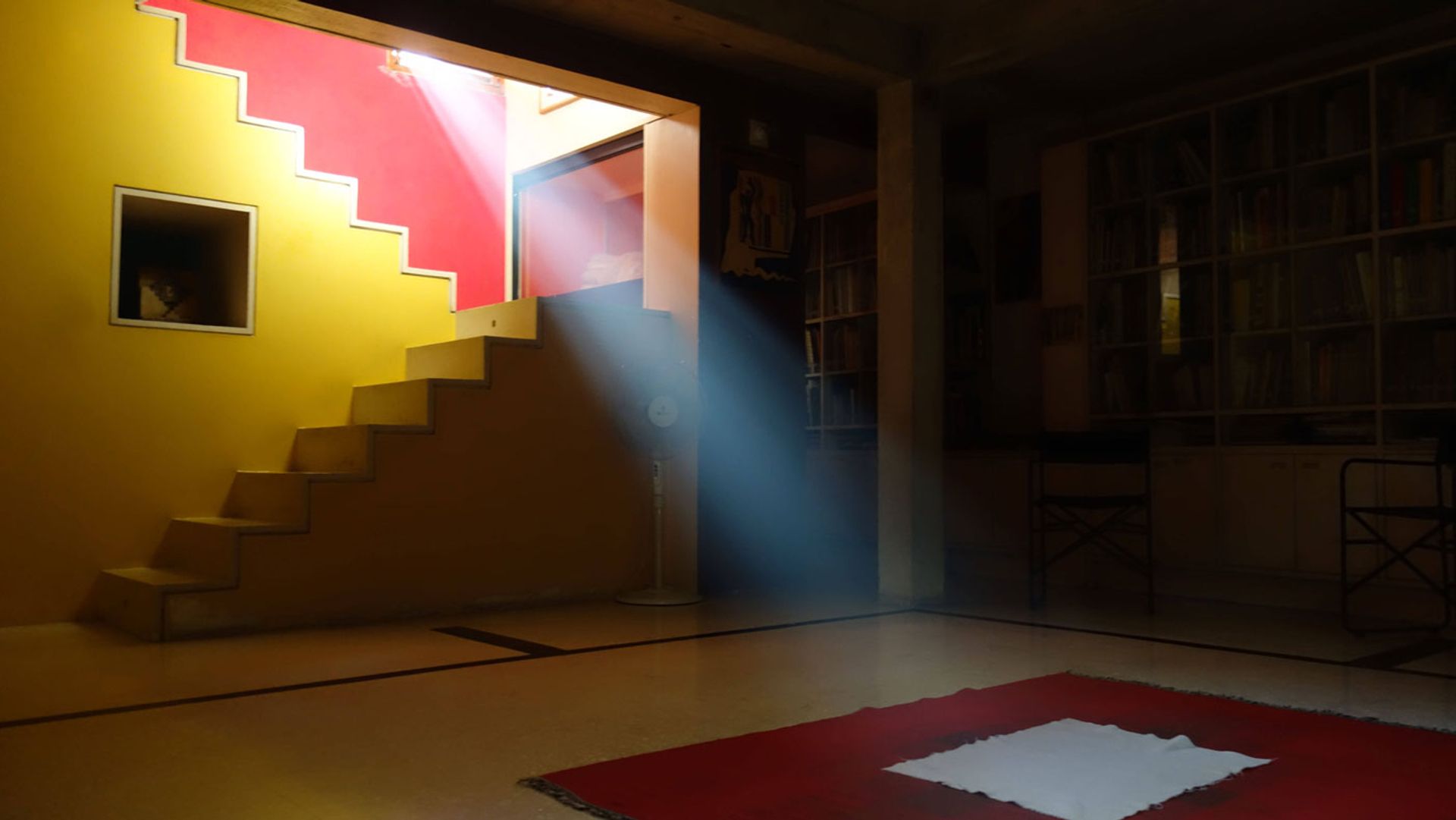
Doshi’s Kamala Home, Ahmedabad (accomplished 1963) Courtesy of Vastushilpa Basis (VSF)
If Sangath, and Kamala Home (accomplished 1963)—the house he constructed for his household in Ahmedabad, named after his spouse—are his most private tasks, the one which greatest characterises his questing, collaborative strategy to his craft is Amdavad ni Gufa, the underground gallery he constructed with MF Husain. Its creation stemmed from a 30-year-long dialog between the 2 males about response to local weather and the advantages of underground areas. It was “designed as an artwork gallery”, Doshi wrote in 2018, however was “reworked and have become a dwelling organism and sociocultural centre attributable to its uncommon mixture of computer-aided design, use of cellular ferro-cement kinds and craftsmanship by native crafts individuals utilizing [their hands and] waste merchandise.” Doshi was delighted when it grew to become a civic area. The place youngsters and previous individuals felt at residence. “I used to be attempting,” Doshi mentioned, “to create delight.”
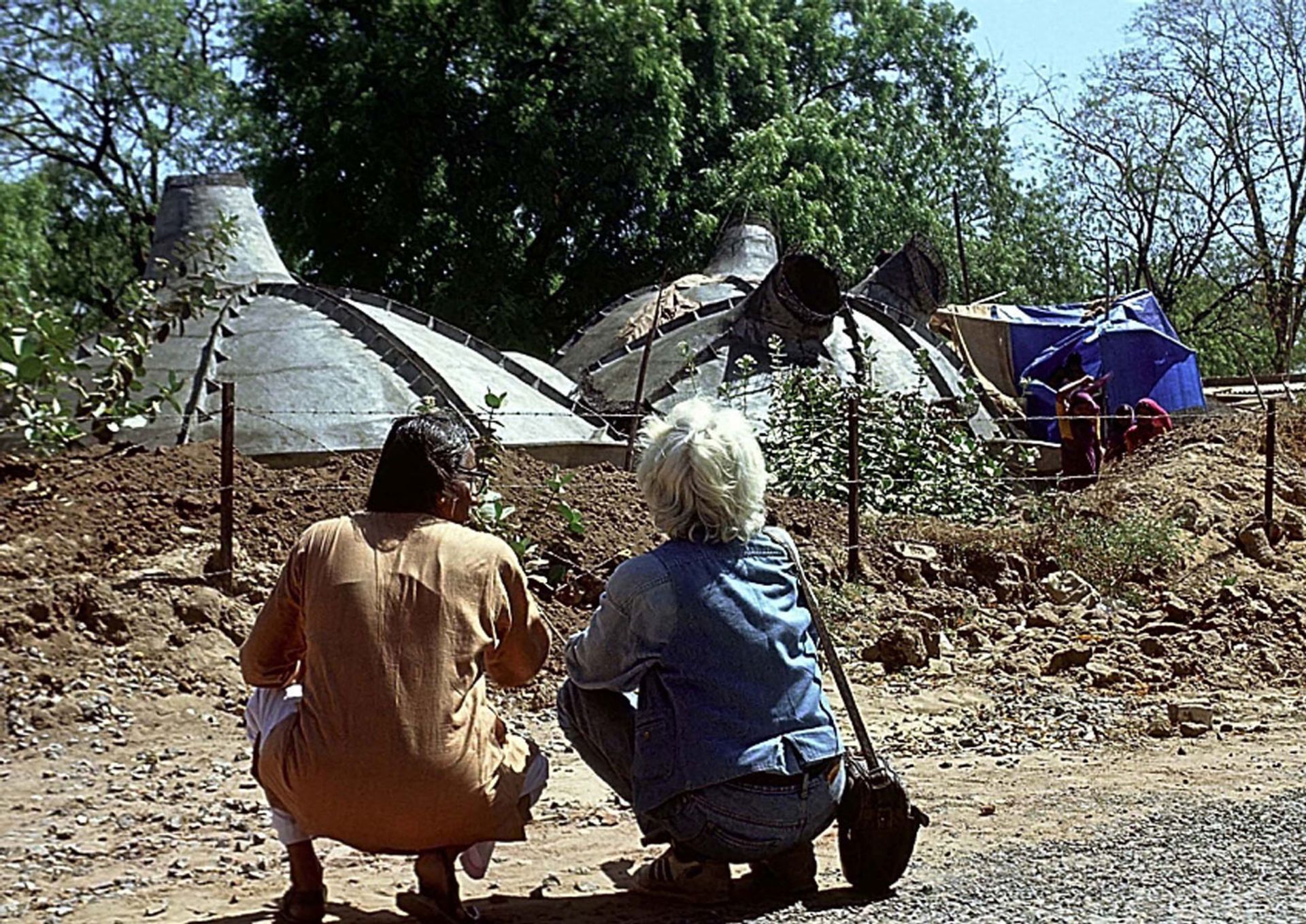
Doshi and the artist MF Husain observing development of Amdavad ni Gufa (accomplished 1995), the fruits of their 30-year dialog about local weather and underground areas Courtesy of Vastushilpa Basis (VSF)
Monographs, retrospectives and prizes
In 2014, Celebrating Habitat: The Actual, the Digital and the Imaginary and Balkrishna Doshi: Structure for the Folks was staged as a retrospective on the Nationwide Gallery of Trendy Artwork, New Delhi. Surveys of Doshi’s architectural work have been printed in 1998 and 2019, the latter to accompany a three-year touring retrospective, Balkrishna Doshi: Structure for the Folks. That exhibition opened on the Vitra Design Museum, in Weil am Rhein, Germany, in 2019, and travelled to Austria and the USA—the place it was proven at Wrightwood 659, Chicago, a transformed condominium constructing designed by his fellow Pritzker laureate the Japanese architect Tadao Ando—earlier than concluding at Genk in Belgium in November 2022.
In his nineties, Doshi remained as considerate and as engaged as ever. Simon Allford, president of the RIBA, travelled to Ahmedabad final 12 months to award Doshi his Gold Medal, inflicting Doshi to recall the time in 1953 when Le Corbusier acquired information that he had the identical award and “mentioned to me metaphorically, ‘I’m wondering how huge and heavy this medal will probably be.’” On the time of his loss of life, a brand new documentary, The Promise – Architect BV Doshi (2023), was in last preparation and an exhibition, Structure is Inside Us: The Chosen Works of Balkrishna Doshi, had simply opened on the Boston Architectural Faculty Library (BAC).
Doshi as soon as recalled that his grandfather had taught him reverence: and later described “dwelling with grace”, as one among his highest goals. That quest, and a way of surprise at life, is obvious within the slight, swish determine of Doshi captured on video, animatedly talking, educating, or answering questions. Roshini Vadehra was struck by his “childlike enthusiasm and heat for all the things and everybody that he got here involved with”.
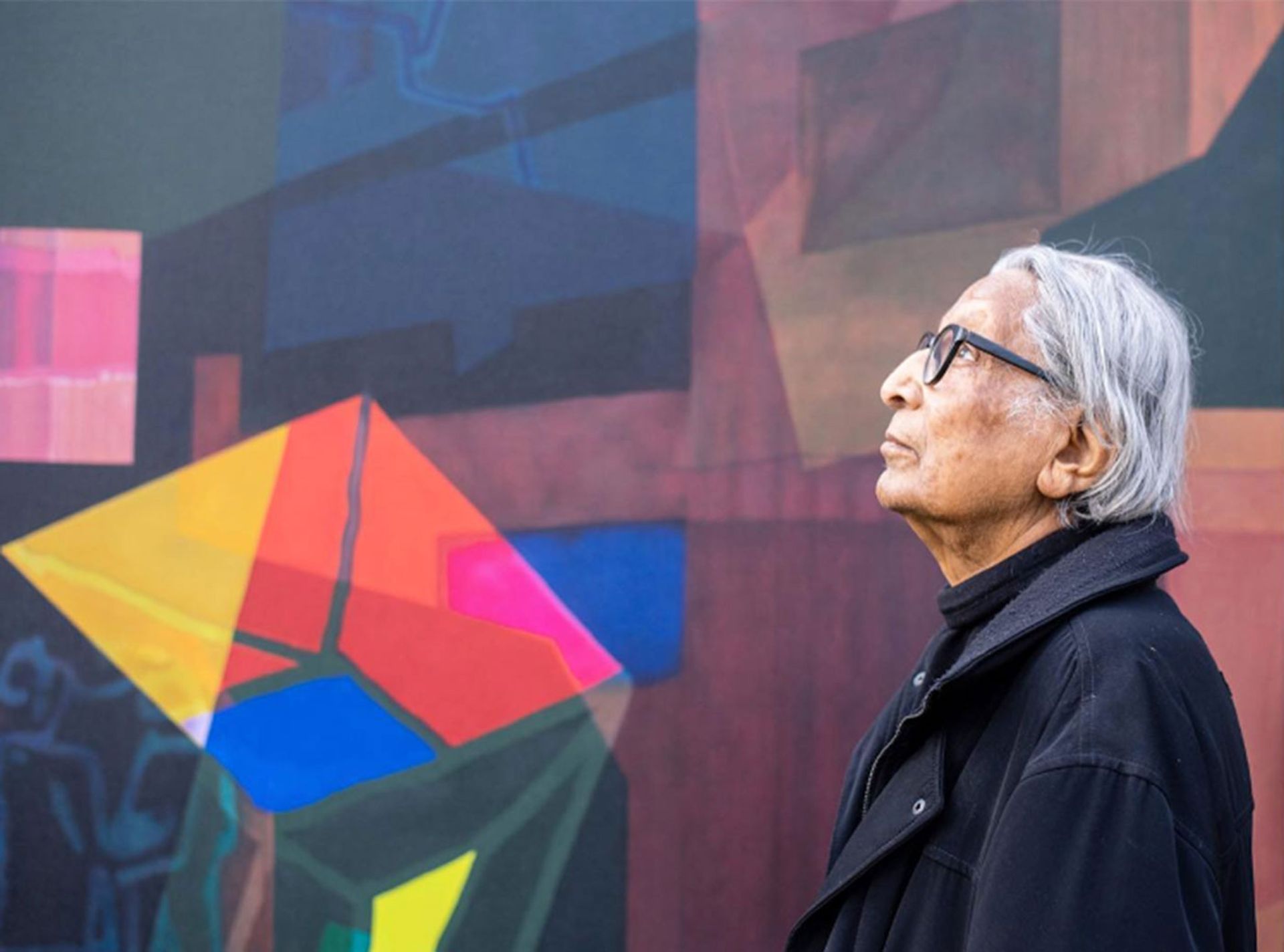
Balkrishna Doshi: architect and tremendous artist Vadehra Gallery
As an architect, Doshi was much less an auteur and extra an empowering determine who took inhabitants and guests on a voyage of discovery, via structure and the setting. “I grew to become conscious of the shut give-and-take relationship between the land, sources, weather conditions and folks very early in my life,” he writes in Paths Uncharted. “I additionally realised that our world consisted of distinct areas, every with its personal traits that included distinct architectural apply distinctive to every area.”
A brand new type of modernity
Within the patent integrity of his strategy—to affordability, livability, a priority for local weather and supplies, and the worth of shared social area—Doshi had a lot in frequent with Hassan Fathy (1900-89), the visionary Egyptian architect of a previous technology. Each have been at residence within the avant-garde of their day, however each have been far forward of their respective occasions in creating a brand new type of modernity, one which promoted native tradition and sustainable development methods, that enabled passive cooling in sizzling climates, and an “structure for the poor” with a real concentrate on how their buildings could be lived in.
In Paths Uncharted Doshi recalled how his life had been balanced between the city and the agricultural to match the steadiness wherein he held the forces of innovation and custom. He described his reminiscences of village life and agricultural economic system; balanced with these of Nineteen Fifties Paris, working with Le Corbusier and to the “totally different impressions of the creative attitudes to city life and the world of tomorrow.”
“Between these two realms—looking for the constants between these two worlds, rural and metropolitan,” he writes, “lies my architectural profession. In my life and my work, the trouble has been to mix the virtues of each and to discover a steadiness between these two worlds.”
Balkrishna Vithaldas Doshi; born Pune 26 August 1927; Pritzker Prize 2018; Padma Bhushan 2020, Padma Vibhushan 2023 (posthumous); RIBA Royal Gold Medal 2022; creator of Paths Uncharted (2019); married 1955 Kamala Parikh (three daughters); died Ahmedabad 24 January 2023.

