Polygon nodes are important community parts, performing duties associated to transaction processing, consensus, safety, sensible contract execution, block creation, information storage, and community governance. Moreover, they contribute to the Polygon blockchain’s general performance, safety, and effectivity. On this information, we’ll evaluate in-depth what a Polygon node precisely is, the different sorts, tips on how to run a Polygon RPC node, and if you happen to completely should run a Polygon node when creating on this layer-2 community!
Overview
In in the present day’s article, you’ll first study what a Polygon node is and the way it works. This can provide help to rise up to hurry relating to these important parts of the Polygon community.
Subsequent, we’ll deal with tips on how to run a Polygon node. That is the place we’ll level out two paths devs can take if they should entry a Polygon node. One requires a severe dedication of assets and time; therefore, we’ll consult with it as “the onerous method” of operating a Polygon node. Nevertheless, you’ll additionally study extra about “the straightforward method” to run a node.
Lastly, you’ll additionally uncover an excellent higher path. Because it seems, you may construct all kinds of killer dapps with out operating a node. It is a extra resource-friendly path accessible to each dapp developer who makes use of the facility of Moralis APIs!

What’s a Polygon Node?
A Polygon node is a important part throughout the Polygon blockchain ecosystem, previously referred to as MATIC. Moreover, a node on Polygon performs a central function in sustaining the community’s integrity and performance. Now, to completely perceive Polygon nodes, let’s dive into the world of blockchain know-how and the way nodes perform.
Within the context of blockchain, a node is sort of a community participant or a pc that connects to the blockchain community. Nodes are important for validating transactions, securing the community, and making certain the ledger’s accuracy. Within the Polygon blockchain, Polygon nodes serve these elementary functions. Think about a Polygon node as a employee in an unlimited workplace constructing. Every employee (node) has a particular job: verifying transactions. When somebody initiates a transaction on the Polygon blockchain, these staff spring into motion. They test the transaction’s particulars, guarantee it’s official, after which file it within the digital ledger.
For instance, consider the Polygon blockchain as an enormous on-line spreadsheet the place transactions are added. Each time you ship cryptocurrency or work together with a sensible contract on the Polygon community, a Polygon node is liable for ensuring your motion is legitimate and updating the spreadsheet accordingly.
Furthermore, Polygon nodes contribute to the community’s consensus mechanism. Within the Polygon blockchain, they take part in a course of referred to as proof-of-stake (PoS), which entails validators being chosen to create new blocks primarily based on the quantity of cryptocurrency they lock up as collateral. This mechanism helps safe the community and keep its easy operation.
Along with transaction validation, Polygon nodes retailer a replica of your entire blockchain’s transaction historical past. This redundancy ensures that even when one “employee’s” file is misplaced or broken, there are lots of others with the identical data, guaranteeing information consistency and community reliability.
How Does a Polygon Node Work?
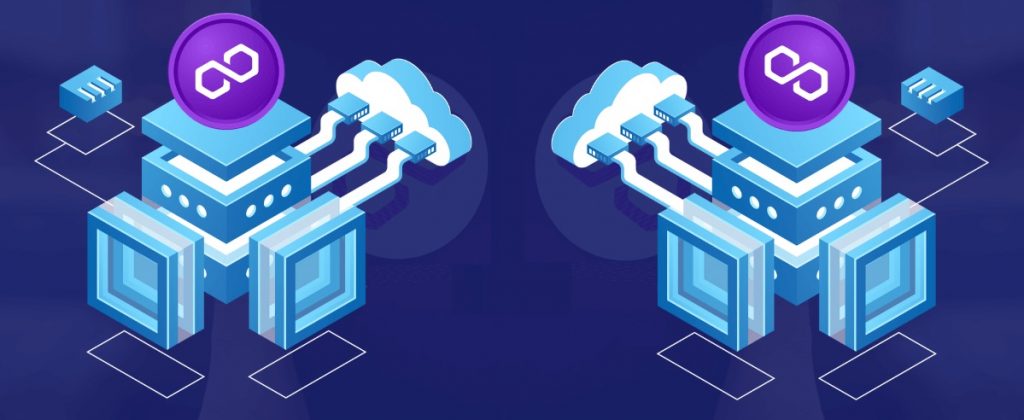
Basically, envision a Polygon node as a diligent guardian of the blockchain’s integrity, performing pivotal roles:
- Transaction Validation: At any time when a person sends cryptocurrency or engages with a sensible contract, a transaction on the Polygon blockchain initiates. So, with each transaction, Polygon nodes grow to be lively sentinels. They scrutinize the transaction’s particulars, rigorously verifying its legitimacy and authenticity. If all checks align, the transaction earns its place throughout the blockchain’s immutable ledger.
- Consensus Engagement: Throughout the Polygon blockchain, the PoS consensus mechanism reigns supreme. Polygon nodes actively take part on this mechanism, akin to stakeholders in a digital democracy. Chosen nodes are tasked with creating new blocks primarily based on their MATIC stake. This course of fortifies the community’s safety and ensures equitable transaction processing.
- Community Harmonization: Polygon nodes function because the spine of information dissemination throughout the community. They uphold a complete file of the blockchain’s transaction historical past, tirelessly relaying this information to their peer nodes. This redundancy assures all contributors a synchronized and harmonious view of the ledger. Thus, it considerably bolsters the blockchain’s resilience and reliability.
From a extra technical perspective, a Polygon node features by way of a devoted software program utility. The latter establishes a significant connection to the Polygon blockchain community and encompasses a number of pivotal parts:
- Validator Essence: Validator nodes, constituting the spine of consensus constructing, tackle the roles of proposing and validating new blocks.
- Archive Vitality: Archive nodes function repositories of intensive historic information, safeguarding previous transactions and sensible contract states. This proves invaluable for builders and customers searching for entry to historic blockchain insights.
- P2P Harmony: Polygon nodes interact in peer-to-peer (P2P) communication, facilitating the alternate of transaction information and blockchain intelligence.
The way to Run a Polygon Node
In the case of operating a Polygon node, builders have two choices. On the one hand, they will determine to commit their effort and time to deploying their very own node. Since this path requires bodily and software program tools plus steady upkeep, it is named “the onerous method” of operating a Polygon node.
However, builders can take a a lot sooner and hand-off strategy. In that case, they will merely run an RPC node provided by one of many Polygon node suppliers. Since this path requires only a easy signup and no additional time dedication, it is named “the straightforward method” of operating Polygon nodes.
You may study extra about every of the 2 methods within the sections beneath.
Working a Polygon Node the Laborious Means
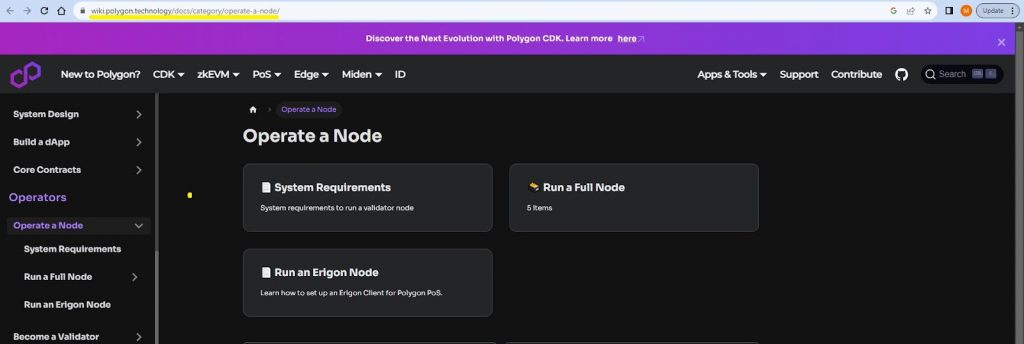
Except your venture really requires you to function a node, we advocate avoiding this path. Nevertheless, in case you want or actually need to run a Polygon node the onerous method, you will have a number of choices. You may run a full node or an Erigon node. Plus, you can even grow to be a Polygon community validator.
Every of those choices has its personal necessities and specifics. Happily, you may evaluate all the small print in Polygon’s official documentation:
Beneficial system necessities for operating Polygon nodes are as follows:
- RAM: 64 GB
- CPU: 16-core
- Storage: 5 TB SSD
- Bandwidth: 1 Gbit/s
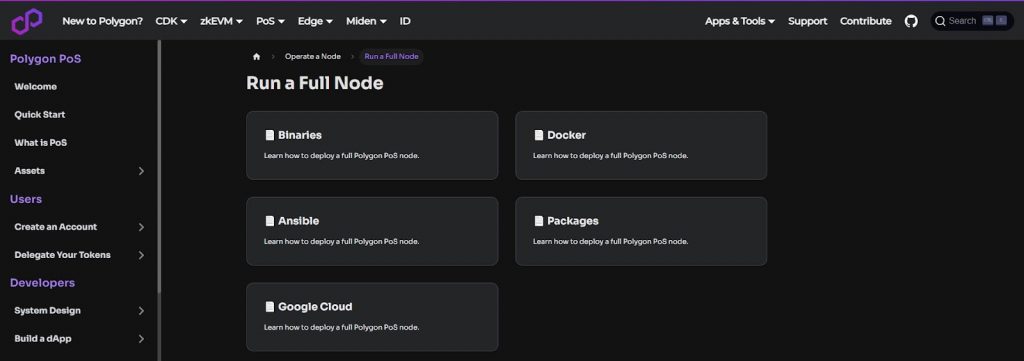
Plus, if you happen to determine to run a full Polygon node, you will have a number of completely different choices to select from:
Working a Polygon RPC Node the Straightforward Means
In case you’re contemplating deploying sensible contracts on the Polygon blockchain, you’ll want entry to a Polygon node. Happily, there’s no have to take the above-outlined route. As an alternative, you may go for a hassle-free methodology.
So, slightly than navigating the complexities, you may depend on a trusted Polygon RPC node supplier. That stated, there are quite a few suppliers accessible, making it essential to decide on properly.
To simplify the method, we’ve compiled a curated record of reliable node suppliers. This makes operating a Polygon RPC node or nodes on different respected EVM-compatible chains straightforward. Right here’s tips on how to get began:
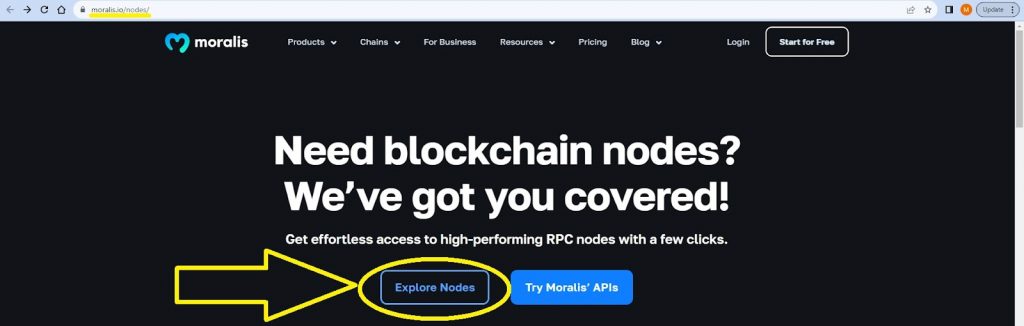
- Head to Moralis’ Blockchain Nodes web page. There, you’ll uncover a complete choice of RPC nodes for varied Web3 chains, together with Polygon:
- Choose the particular chain you want to deal with (on this case, Polygon), and click on on the “Entry” button subsequent to it:
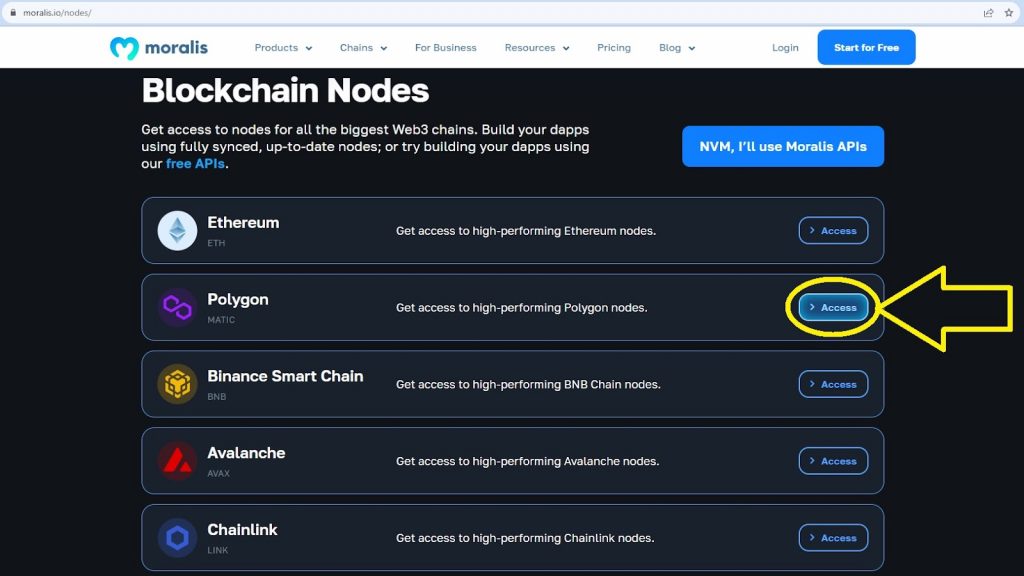
By clicking on “Entry,” you’ll be directed to a reliable RPC node supplier, and to start out using the nodes, it’s essential to full the registration course of. Merely present your data and arrange an account password. Then, you’ll be capable to entry an RPC node.
With this user-friendly strategy, operating a Polygon RPC node turns into an easy activity. It permits you to harness the facility of the Polygon blockchain in your sensible contract deployment and on-chain information fetching wants.
Begin Growing on Polygon With out Working Nodes
When venturing into Web3 tasks, the choice relating to node administration may be pivotal. Nevertheless, you could end up doubtful about whether or not to delve into the complexities of operating your personal Polygon node or not. If such doubts happen, be at liberty to make use of Moralis’s help chat. You are able to do so by clicking on the Moralis brand discreetly tucked within the bottom-right nook of the display:

In lots of situations, you may craft sturdy decentralized functions (dapps) with out managing your personal Polygon node. Usually, you may even keep away from utilizing an RPC node supplier.
In case you have a look at the Moralis Blockchain Nodes web page rigorously, you’ll discover the “NVM, I’ll use Moralis APIs” button. The latter alerts the trail of least resistance – constructing dapps utilizing Moralis APIs with out coping with nodes.
Embracing Moralis’ suite of Web3 APIs opens the door to bypassing node administration fully. Not solely does it prevent treasured growth time, but it surely additionally conserves very important assets.
So, if you happen to’re desirous to embark on Polygon growth or discover different main EVM-compatible chains with out wrestling with node complexities, merely click on on the “NVM” button. Alternatively, navigate to the highest menu of any Moralis web page and discover all accessible APIs. We’ll do an outline of the Moralis API fleet beneath.
Use Instances for Polygon Nodes
Polygon nodes have many alternative use instances. Nevertheless, usually talking, all of them fall into one of many following three classes:
- Community Validation: Polygon nodes are instrumental in turning into community validators. Validators assist safe the community, affirm transactions, and make sure the general stability of the Polygon blockchain. By operating a Polygon node, people can actively contribute to community consensus and safety.
- On-Chain Information Acquisition: One other important use case for Polygon nodes is the retrieval of on-chain information. Builders and analysts depend on these nodes to entry real-time and historic information saved on the Polygon blockchain.
- Dapp Improvement: Polygon nodes present a dependable infrastructure for dapp builders who have to deploy quite a few sensible contracts. By connecting to a trusted RPC node, builders guarantee seamless interplay with the Polygon blockchain.
Creating Superior Poylgon Dapps the Straightforward Means with Moralis Cash
Many Web3 builders purpose to create progressive and practical dapps. Nevertheless, many neglect that you just don’t want a Polygon node to take action.
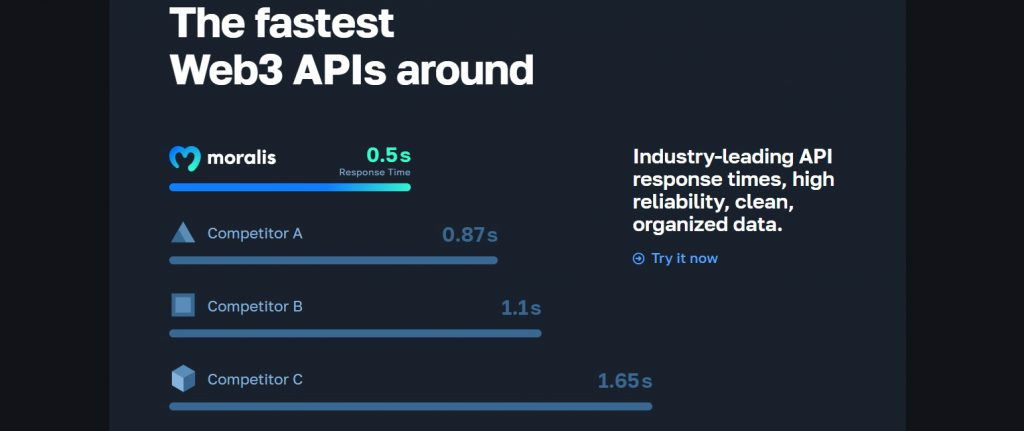
Moralis APIs are every part you want! They permit you to keep away from repetitive duties and as an alternative deal with the distinctive options of your dapp. And one of the best half is that you just don’t should run your Polygon node to construct a variety of dapps, together with blockchain explorers, reside value feed websites, NFT marketplaces, NFT authentication websites, Web3 wallets, portfolio dapps, and extra.
Right here’s the present Moralis API fleet that makes dapp growth as easy because it will get:
Abstract – Polygon Node Information: The way to Run a Polygon RPC Node
All through the above sections, you first had an opportunity to study the fundamentals relating to what a Polygon node is. As such, you now know {that a} node on Polygon is a pc that runs a particular piece of software program, which permits it to take part within the Polygon blockchain. Basically, Polygon nodes are the core constructing blocks of the Polygon community. They make sure the community’s decentralization, safety, and stability and that each one common operations run easily.
Nevertheless, crucial a part of in the present day’s article was all about tips on how to run a Polygon node. As such, you realized about operating Polygon nodes the onerous method, the straightforward method, and even skipping that activity altogether. In flip, you now know that the particularity of your Web3 venture will decide which path you may take.
However because it seems, you may cowl most tasks through the use of a dependable RPC Polygon node supplier. That is the place the Moralis Blockchain node web page makes a world of distinction. It provides you a curated record of RPC nodes for all of the main EVM-compatible chains, together with Ethereum node and BSC node suppliers.
Nonetheless, if you’re primarily fascinated with constructing a killer dapp on Polygon, you may be capable to keep away from operating a node fully. In any case, due to Moralis APIs, you may construct a variety of dapps with out breaking a sweat or the financial institution.
No matter street you are taking in your Polygon growth journey, you’ll want to first check your functions on the Polygon testnet. To take action, you have to some check MATIC, which you will get through dependable Polygon testnet faucet. Happily, you’ll find one on the Morali taps web page.

