Immediately’s blockchain API tutorial will spotlight quite a few API examples and reveal the way to fetch important blockchain knowledge. As we transfer ahead, we’ll dive into Moralis’ industry-leading Blockchain API – the final word software for blockchain knowledge. It options quite a few endpoints, permitting you to effortlessly get blocks, transactions, logs, occasions, and far more. To provide you just a little sneak peek, right here’s a blockchain API instance of how one can get the contents of a block with a single name to Moralis’ Blockchain API:
const response = await Moralis.EvmApi.block.getBlock({
  "chain": "0x1",
  "blockNumberOrHash": "15863321"
});
All it’s a must to do is configure the chain and blockNumberOrHash parameters to suit your question earlier than calling the endpoint within the instance above. In return, you’ll get a response containing the block’s timestamp, quantity, hash, log bloom, miner, and far more. That is what it could actually appear like:
{
  "timestamp": "2021-05-07T11:08:35.000Z",
  "quantity": 12386788,
  "hash": "0x9b559aef7ea858608c2e554246fe4a24287e7aeeb976848df2b9a2531f4b9171",
  "parent_hash": "0x011d1fc45839de975cc55d758943f9f1d204f80a90eb631f3bf064b80d53e045",
  "nonce": "0xedeb2d8fd2b2bdec",
  "sha3_uncles": "0x1dcc4de8dec75d7aab85b567b6ccd41ad312451b948a7413f0a142fd40d49347",
  "logs_bloom": "0xdde5fc46c5d8bcbd58207//...",
  "transactions_root": "0xe4c7bf3aff7ad07f9e80d57f7189f0252592fee6321c2a9bd9b09b6ce0690d27",
  "state_root": "0x49e3bfe7b618e27fde8fa08884803a8458b502c6534af69873a3cc926a7c724b",
  "receipts_root": "0x7cf43d7e837284f036cf92c56973f5e27bdd253ca46168fa195a6b07fa719f23",
  "miner": "0xea674fdde714fd979de3edf0f56aa9716b898ec8",
  "problem": "7253857437305950",
  "total_difficulty": "24325637817906576196890",
  "dimension": "61271",
  "extra_data": "0x65746865726d696e652d6575726f70652d7765737433",
  "gas_limit": "14977947",
  "gas_used": "14964688",
  "transaction_count": "252",
  "transactions": {
    //...
    }
}
And that’s it; when working with Moralis, getting blockchain knowledge doesn’t must be harder. Nevertheless, if you would like a extra detailed tutorial and discover some extra endpoints, learn on! Additionally, if you wish to comply with alongside and make related calls your self, don’t neglect to enroll with Moralis. You may create an account free of charge and instantly unlock the ability of blockchain knowledge!
Overview
In at this time’s tutorial, we’ll kickstart issues by diving straight into the Moralis Blockchain API. In doing so, we’ll briefly discover what this software does and canopy a few of its key advantages. From there, we’ll discover some outstanding use circumstances and offer you a sensible instance of how one can leverage the Blockchain API in every case. Lastly, to prime issues off, we’ll leap into an in-depth tutorial displaying you the way to get the contents of a block by its quantity in three simple steps:
- Get a Moralis API Key
- Write a Script Calling the
getBlock()Endpoint - Execute the Code
Additionally, when you’re critical about constructing blockchain tasks, think about trying out some extra Web3 knowledge instruments Moralis affords. As an example, discover the Value API to learn to seamlessly get costs of crypto and combine this knowledge into your tasks!
However, with out additional ado, let’s discover Moralis’ industry-leading Blockchain API!
What’s the Moralis Blockchain API?
The Moralis Blockchain API is an industry-leading interface that means that you can seamlessly unlock the ability of uncooked blockchain knowledge with velocity and precision. With solely single traces of code, you may effortlessly get blocks, transactions, logs, occasions, and far more with the Blockchain API. As such, when working with the Moralis, it has by no means been simpler to construct Web3 tasks!
So, what are the options of the Blockchain API?
- Get Block Information: Get data on specific blocks – together with timestamps, gasoline used, miners, transactions, and many others. – throughout a number of blockchain networks.
- Fetch Transactions and Inner Transactions: Seamlessly entry all historic and real-time transactions of an handle.
- Question Logs and Occasions: Use the Blockchain API to question logs and occasions of any good contract throughout all main EVM chains.
- Uncooked and Decoded Information: Get each uncooked and decoded knowledge primarily based on contract ABIs.
- Labels: Efforlessly interpret transactions with enriched knowledge labeling, together with receiver and sender handle labels.
- And extra!
Moreover, the Blockchain API is cross-chain suitable. This implies you may question blockchain knowledge throughout all main networks, together with Ethereum, Polygon, BNB Good Chain, Arbitrum, and plenty of others!
Advantages of the Moralis Blockchain API
Together with many highly effective options, the Blockchain API additionally gives many advantages. Listed below are 4 outstanding examples:
- Scalable: Our Blockchain API is constructed for progress. Consequently, as your tasks see elevated adoption, the interface may have no hassle delivering at the same time as your consumer base grows.
- Actual-Time: The Blockchain API is quick, indexes real-time knowledge, and ensures speedy entry to the most recent blockchain data.
- Exact: Information accuracy is crucial when constructing Web3 tasks, which is why the Blockchain API all the time affords exact and dependable knowledge.
- Organized: Blockchain knowledge might be messy, and we consider in digestible and detailed info. As such, our Blockchain API organizes blocks into transfers, transactions, and logs, providing you with a structured solution to navigate the crypto panorama.
Now, with an summary of our industry-leading Blockchain API, let’s discover a few of its use circumstances!
Blockchain API Examples and Use Instances
The Moralis Blockchain API has many outstanding use circumstances, and on this part, we’ll take a look at three examples:
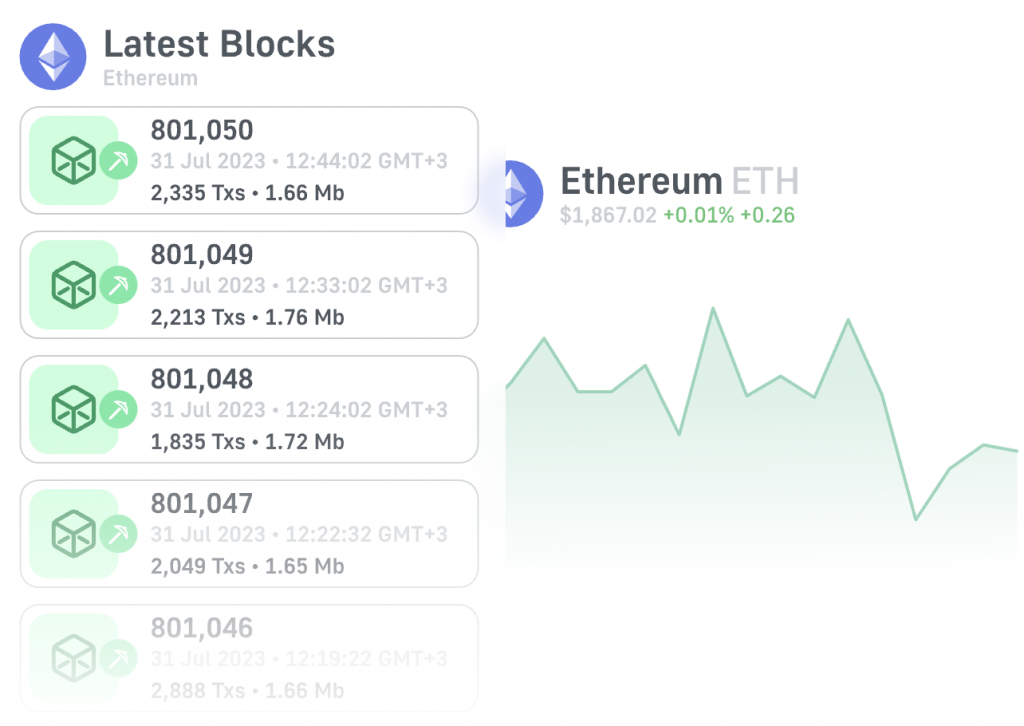
- Block Explorers: Block explorers are on-line instruments enabling you to seek for real-time and historic knowledge a few blockchain. This normally contains block knowledge, addresses, transactions, and far more. Some outstanding examples of already current block explorers are Etherscan, PolygonScan, and BscScan.
Since explorers assist you to seek for details about a blockchain, you want seamless entry to this knowledge (e.g., transactions, blocks, logs, and many others.) when constructing one. And the best solution to question this data is to make use of the Moralis Blockchain API.
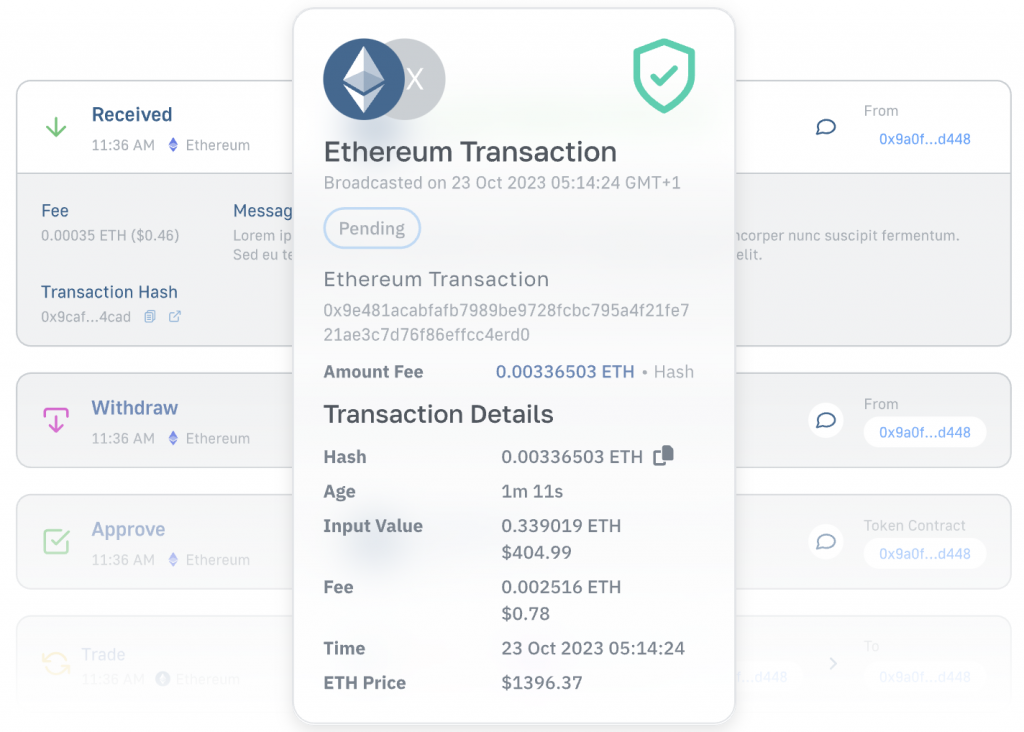
- Web3 Wallets: Web3 wallets are software program permitting you to retailer and handle digital property, together with fungible and non-fungible tokens. Some examples of outstanding pockets suppliers embrace MetaMask and Rainbow.
A typical function of most Web3 wallets is to show every consumer’s pockets exercise. This offers customers an summary of all their trades, which might be helpful in lots of circumstances. To show this info, you want entry to transaction data and occasions, which is the place our Blockchain API enters the equation.
- Decentralized Software (Dapp) Alerts: When constructing dapps, it may be extremely useful to arrange alert techniques to inform customers of essential occasions. This could, as an example, be alerts for when crypto whales promote a big portion of their holdings.
To arrange alert techniques like this, you want entry to good contract occasions and logs, which you’ll effortlessly get with solely single traces of code when working with our Blockchain API.
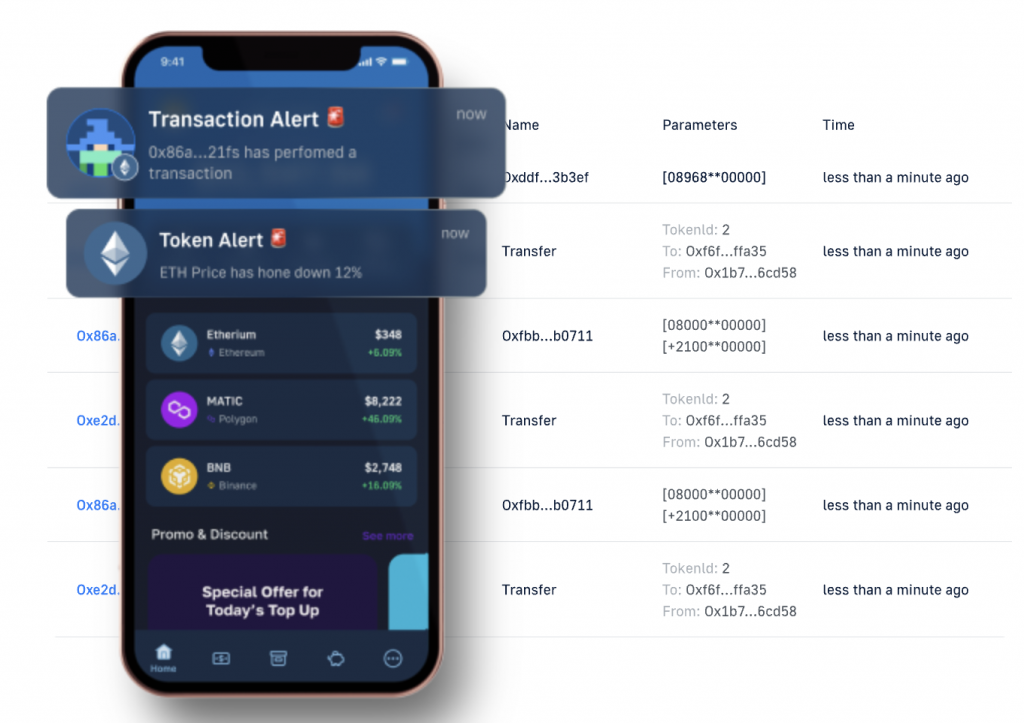
However, that covers three outstanding use circumstances. Within the following sections, we’ll increase on this additional by offering examples of the way to use the Blockchain API to get the information you want with a number of programming languages!
Block Explorers: JavaScript Blockchain API Instance
As talked about above, you want entry to a variety of knowledge when constructing a block explorer. With the Moralis Blockchain API, you will get the information you want in a heartbeat!
All it’s a must to do is name the getBlock() endpoint whereas passing alongside two parameters: chain and blockNumberOrHash. Right here’s an instance of what it’d appear like:
const response = await Moralis.EvmApi.block.getBlock({
  "chain": "0x1",
  "blockNumberOrHash": "15863321"
});
In return for calling the endpoint above, you’ll get a complete response trying one thing like this:
{
  "timestamp": "2021-05-07T11:08:35.000Z",
  "quantity": 12386788,
  "hash": "0x9b559aef7ea858608c2e554246fe4a24287e7aeeb976848df2b9a2531f4b9171",
  "parent_hash": "0x011d1fc45839de975cc55d758943f9f1d204f80a90eb631f3bf064b80d53e045",
  "nonce": "0xedeb2d8fd2b2bdec",
  "sha3_uncles": "0x1dcc4de8dec75d7aab85b567b6ccd41ad312451b948a7413f0a142fd40d49347",
  "logs_bloom": "0xdde5fc46c5d8bcbd58207//...",
  "transactions_root": "0xe4c7bf3aff7ad07f9e80d57f7189f0252592fee6321c2a9bd9b09b6ce0690d27",
  "state_root": "0x49e3bfe7b618e27fde8fa08884803a8458b502c6534af69873a3cc926a7c724b",
  "receipts_root": "0x7cf43d7e837284f036cf92c56973f5e27bdd253ca46168fa195a6b07fa719f23",
  "miner": "0xea674fdde714fd979de3edf0f56aa9716b898ec8",
  "problem": "7253857437305950",
  "total_difficulty": "24325637817906576196890",
  "dimension": "61271",
  "extra_data": "0x65746865726d696e652d6575726f70652d7765737433",
  "gas_limit": "14977947",
  "gas_used": "14964688",
  "transaction_count": "252",
  "transactions": {
    //...
    }
}
Notice: We used JavaScript for the instance above. Nevertheless, it’s also possible to use a number of different programming languages, together with Python, TypeScript, and many others. To be taught extra about this, take a look at our official get block by block quantity documentation web page.
Web3 Wallets: Python Blockchain API Instance
When constructing a Web3 pockets, you want seamless entry to a consumer’s transaction historical past so you may show this info. With our Blockchain API, you may seamlessly get this knowledge with a single name to the get_wallet_transactions() endpoint whereas passing alongside two parameters: chain and handle. Right here’s an instance of what it’d appear like:
params = {
  "chain": "eth",
  "handle": "0x1f9090aaE28b8a3dCeaDf281B0F12828e676c326"
}

outcome = evm_api.transaction.get_wallet_transactions(
  api_key=api_key,
  params=params,
)
In return for calling the get_wallet_transactions() endpoint, you get an array of all inbound and outbound transactions of the supplied handle. That is what the response can appear like:
{
  "page_size": 100,
  "web page": 0,
  "cursor": "eyJhbGciOiJIUzI1N//...",
  "outcome": [
    {
      "hash": "0x4742fc54f2f6f1121d472ebc6cad6821f9d79407237c36782641d9873832b825",
      "nonce": "337201",
      "transaction_index": "149",
      "from_address": "0x1f9090aae28b8a3dceadf281b0f12828e676c326",
      "from_address_label": "rsync-builder",
      "to_address": "0xde2a1a6dd691e56fc225d13ab51d4e05ea148f2f",
      "to_address_label": null,
      "value": "38602051712948608",
      "gas": "21000",
      "gas_price": "13881451241",
      "input": "0x",
      "receipt_cumulative_gas_used": "29986680",
      "receipt_gas_used": "21000",
      "receipt_contract_address": null,
      "receipt_root": null,
      "receipt_status": "1",
      "block_timestamp": "2023-10-31T07:44:23.000Z",
      "block_number": "18468703",
      "block_hash": "0x2c00ee96af806132e858edc91406843258d234783c39d30313644b46c2af2315",
      "transfer_index": [
        18468703,
        149
      ]
     //...
  ]
Notice: We used Python for this instance. Nevertheless, it’s also possible to use many different languages, together with JavaScript, TypeScript, and many others. Take a look at the official get transactions of handle documentation to be taught extra.
Dapp Alerts: TypeScript Blockchain API Instance
When constructing dapps, you typically want a simple solution to arrange alerts so you may notify your finish customers of essential occasions. To take action, you want entry to occasions and logs of good contracts.
So, to get the logs of any contract, all you want is a single API name to the getContractLogs() endpoint whereas passing alongside three parameters: handle, chain, and subject. That is what a request may appear like:
const response = await Moralis.EvmApi.occasions.getContractLogs({
  "chain": "0x1",
  "topic0": "0xddf252ad1be2c89b69c2b068fc378daa952ba7f163c4a11628f55a4df523b3ef",
  "handle": "0xb47e3cd837dDF8e4c57F05d70Ab865de6e193BBB"
});
In return for calling the endpoint above, you’ll get a response containing all logs primarily based in your specs. Right here’s an instance of what it’d appear like:
{
  "page_size": 100,
  "web page": 1,
  "cursor": "eyJhbGciO//...",
  "outcome": [
    {
      "transaction_hash": "0x4abb0d08b5fea482ce708b880c60757635a38203b55fd064148c3f6301206efa",
      "address": "0xb47e3cd837ddf8e4c57f05d70ab865de6e193bbb",
      "block_timestamp": "2023-10-31T07:33:35.000Z",
      "block_number": "18468649",
      "block_hash": "0x7fd8e733e3a7c03624b9bdcaa058a6be60089093a1d0976db450fb60dbafc0db",
      "data": "0x0000000000000000000000000000000000000000000000000000000000000001",
      "topic0": "0xddf252ad1be2c89b69c2b068fc378daa952ba7f163c4a11628f55a4df523b3ef",
      "topic1": "0x000000000000000000000000ff36ff458b51dcd034598c56f65a8491427dc572",
      "topic2": "0x000000000000000000000000e42abe865a7f83f8662e0d602195ade90a569ff0",
      "topic3": null,
      "transaction_index": 76,
      "log_index": 73
    },
    //...
 ]
Notice: We used TypeScript within the instance above. Nevertheless, you will get logs utilizing different programming languages as nicely, together with JavaScript, Python, and others. To be taught extra, take a look at the official get logs for contract documentation.
That’s it for our three examples. Within the subsequent part, we’ll offer you a extra in-depth tutorial on how one can name the assorted endpoints of the Blockchain API!
Step-by-Step Blockchain API Tutorial
On this part, we’ll offer you an in-depth tutorial on how one can get block knowledge by its quantity utilizing the Moralis Blockchain API. Because of the accessibility of this industry-leading Web3 improvement software, you will get the information you want in three simple steps:
- Get a Moralis API Key
- Write a Script Calling the
getBlock()Endpoint - Execute the Code
Nevertheless, earlier than you may name the getBlock() endpoint, it is advisable cope with just a few conditions!
Stipulations
In at this time’s blockchain API instance tutorial, we’ll be utilizing JavaScript. As such, if you wish to comply with alongside, ensure you have the next prepared:
Step 1: Get a Moralis API Key
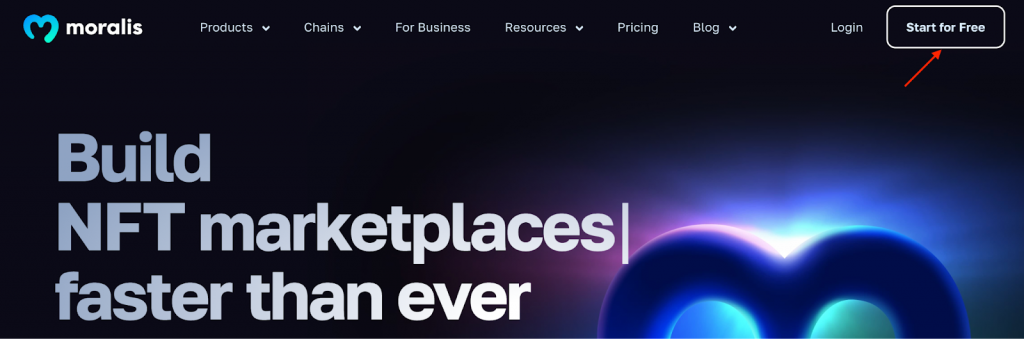
To have the ability to name the Blockchain API and the getBlock() endpoint, you want a Moralis API key. To get an API key, you want a Moralis account. So, when you haven’t already, click on on the ”Begin for Free” button on the prime proper and arrange your account:
With a Moralis account at hand, head on over to the ”Settings” tab, scroll right down to the ”API Keys” part, and duplicate your key:
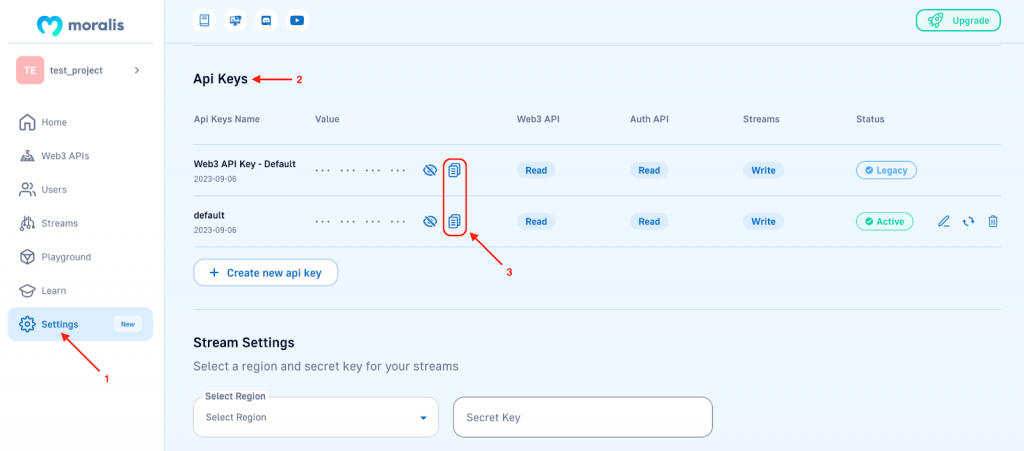
Hold it for now, as you want it within the subsequent part!
Step 2: Write a Script Calling the getBlock() Endpoint
For the second step, begin by establishing a brand new undertaking in your built-in improvement surroundings (IDE). From there, open a brand new terminal and run the command under within the undertaking’s root folder to put in the Moralis SDK:
npm set up moralis @moralisweb3/common-evm-utils
Subsequent, create a brand new ”index.js” file and add the next code:
const Moralis = require("moralis").default;
const { EvmChain } = require("@moralisweb3/common-evm-utils");

const runApp = async () => {
  await Moralis.begin({
    apiKey: "YOUR_API_KEY",
    // ...and another configuration
  });

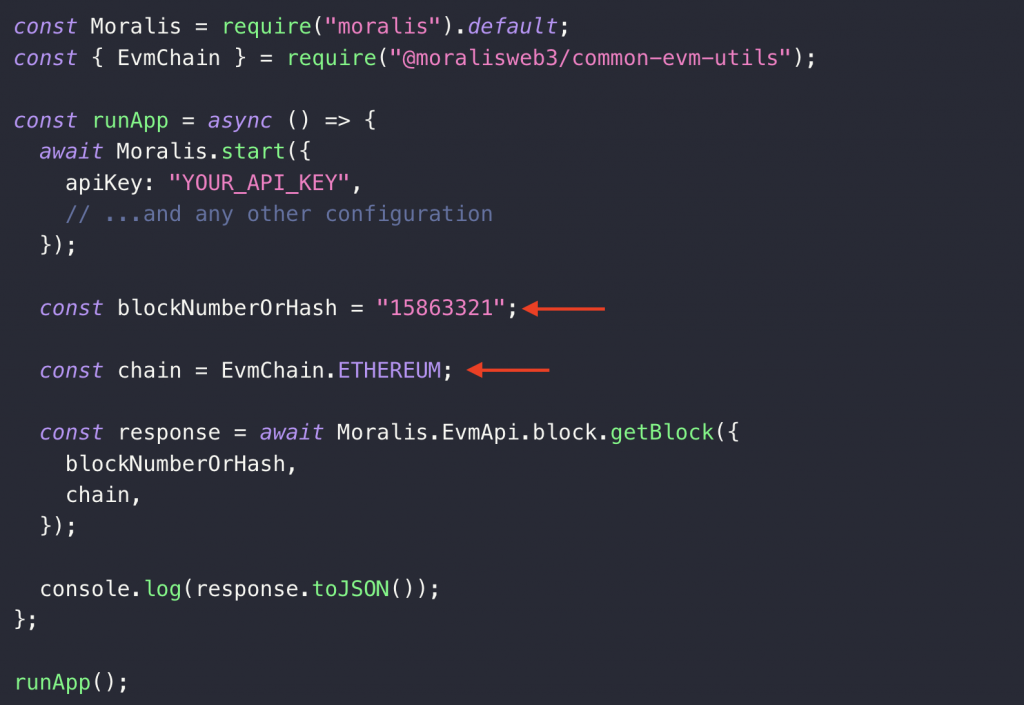
  const blockNumberOrHash = "15863321";

  const chain = EvmChain.ETHEREUM;

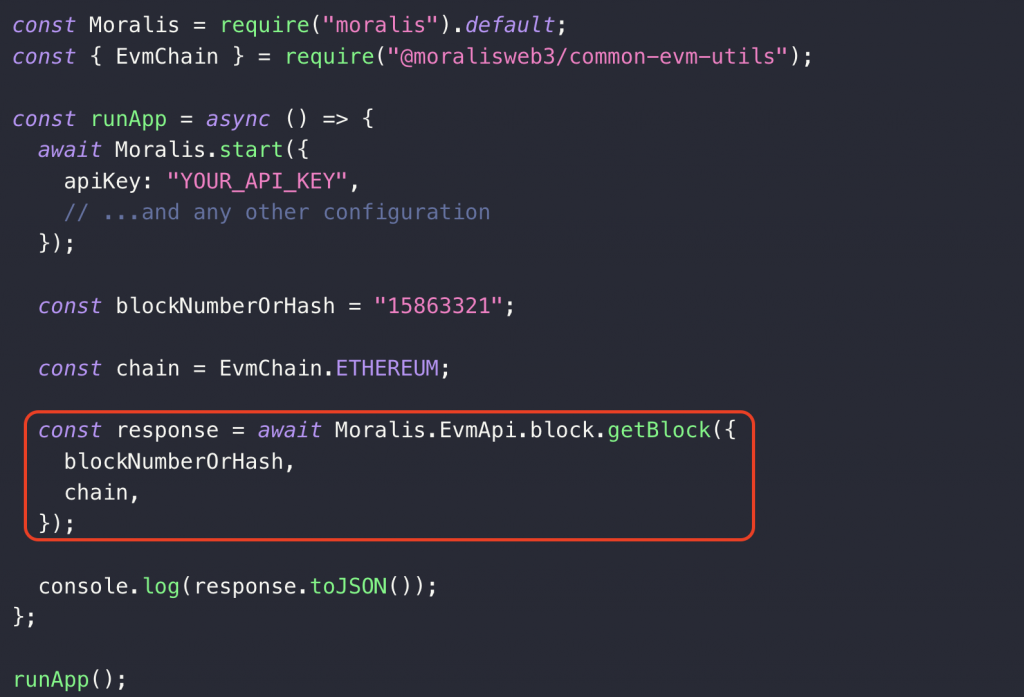
  const response = await Moralis.EvmApi.block.getBlock({
    blockNumberOrHash,
    chain,
  });

  console.log(response.toJSON());
};

runApp();
You then want to vary the code barely, and you can begin by changing YOUR_API_KEY with the important thing you copied within the earlier step to initialize Moralis:
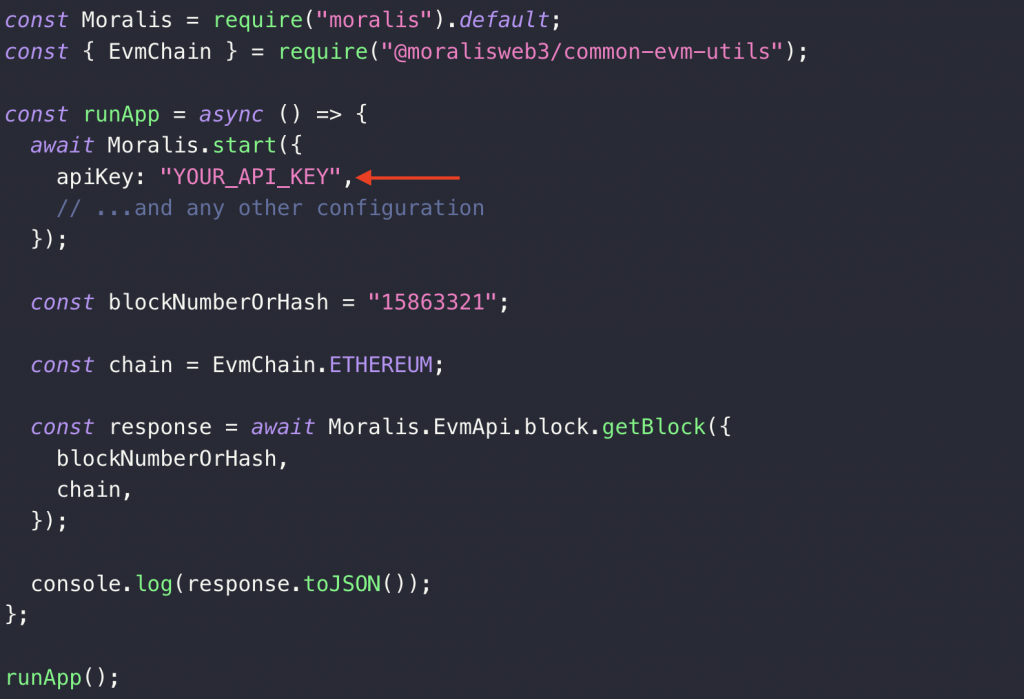
Subsequent, configure the blockNumberOrHash and chain constants to suit your question:
We then go blockNumberOrHash and chain as parameters when calling the getBlock() endpoint:
That’s it; you’re now able to run the code!
Step 3: Execute the Code
For the ultimate step, open a brand new terminal, cd into your undertaking’s root folder, and run the next command:
node index.js
Executing the command above will run the code, and in return, you’ll get a bunch of data associated to the block in query. Some outstanding examples embrace a timestamp, log bloom, gasoline used, the miner, an array of transactions, and far more. That is what it’d appear like:
{
  "timestamp": "2022-10-30T20:39:11.000Z",
  "quantity": "15863321",
  "hash": "0x4f5d3bb78f0311301ef282b281d23e178ced236a7ae465820fe6edeba609954a",
  "parent_hash": "0x27e61d430386d7b4a144bee6e120a57010fbdb3cf963ca37e2d20b5452203621",
  "nonce": "0x0000000000000000",
  "sha3_uncles": "0x1dcc4de8dec75d7aab85b567b6ccd41ad312451b948a7413f0a142fd40d49347",
  "logs_bloom": "0x11e91824051850625f13 ...",
  "transactions_root": "0x1e0b205c9c48af7dfa3f277c8ec2ba403dc4ab63635a18bbfe532097527fb18e",
  "state_root": "0xcb1df24273693eb33869961233baac112adbdf51e980e5cf8b8aa7084e8063be",
  "receipts_root": "0x3a3d89417ad3898d47f66155e0e5fdf3e1efde2a6f389e7b051acf729db28617",
  "miner": "0x388C818CA8B9251b393131C08a736A67ccB19297",
  "problem": "0",
  "total_difficulty": "58750003716598360000000",
  "dimension": "117595",
  "extra_data": "0x",
  "gas_limit": "30000000",
  "gas_used": "19044124",
  "transaction_count": "156",
  "base_fee_per_gas": "8175724594",
  "transactions": [
    {
      //...
  ]
}
Congratulations; that’s it for this blockchain API tutorial. You now know the way to simply get a block’s contents utilizing its quantity!
Additionally, this was only a easy blockchain API instance, and you’ll comply with the identical steps (with minor configurations to the code within the second half) to name another of our API endpoints.
To discover all current endpoints, take a look at the official Moralis Blockchain API documentation web page!
Abstract: Blockchain API Instance and Tutorial
In at this time’s tutorial, we explored the Moralis Blockchain API, which is an industry-leading software for getting and integrating blockchain knowledge into Web3 tasks, together with transactions, logs, occasions, and many others. This software boasts many outstanding options and helps all main chains, making Moralis clearly stand out because the premier possibility among the many greatest blockchain API suppliers within the enterprise!
Along with exploring the Blockchain API, we additionally confirmed you the way to use this software to get the content material of a block by its quantity in three simple steps:
- Get a Moralis API Key
- Write a Script Calling the
getBlock()Endpoint - Execute the Code
As such, if in case you have adopted alongside this far, you now have the talents to fetch knowledge, akin to blocks, occasions, logs, and far more, with Moralis’ Blockchain API!

In the event you appreciated this Blockchain API tutorial, think about studying extra guides right here on the weblog. As an example, discover the intricacies of meta transactions, examine EIP-4844, or learn to arrange notifications for NFT gross sales. Additionally, don’t neglect to enroll with Moralis. You may create an account free of charge, and also you’ll get speedy entry to all industry-leading instruments, together with the Blockchain API!

