There are few lonelier footage than Edvard Munch’s The Scream (1893), with its protagonist wailing beneath a fire-orange sky, or Melancholy (1891), depicting a person sat mournfully by a shoreline. Nonetheless, a forthcoming exhibition on the Nationwide Portrait Gallery in London will present a wholly totally different facet to the work of the Norwegian Expressionist, bringing to the fore the vigorous community of household, mates and patrons he painted all through his life.
Edvard Munch Portraits is the primary UK present to concentrate on Munch’s portraiture, outlined as work he made “from a specific individual within the second”, explains its curator Alison Smith. It explores the artist’s household life and time spent in Bohemian circles in Kristiania (present-day Oslo), Paris and Berlin, together with an additional spell in Germany and his later years after returning to Norway.
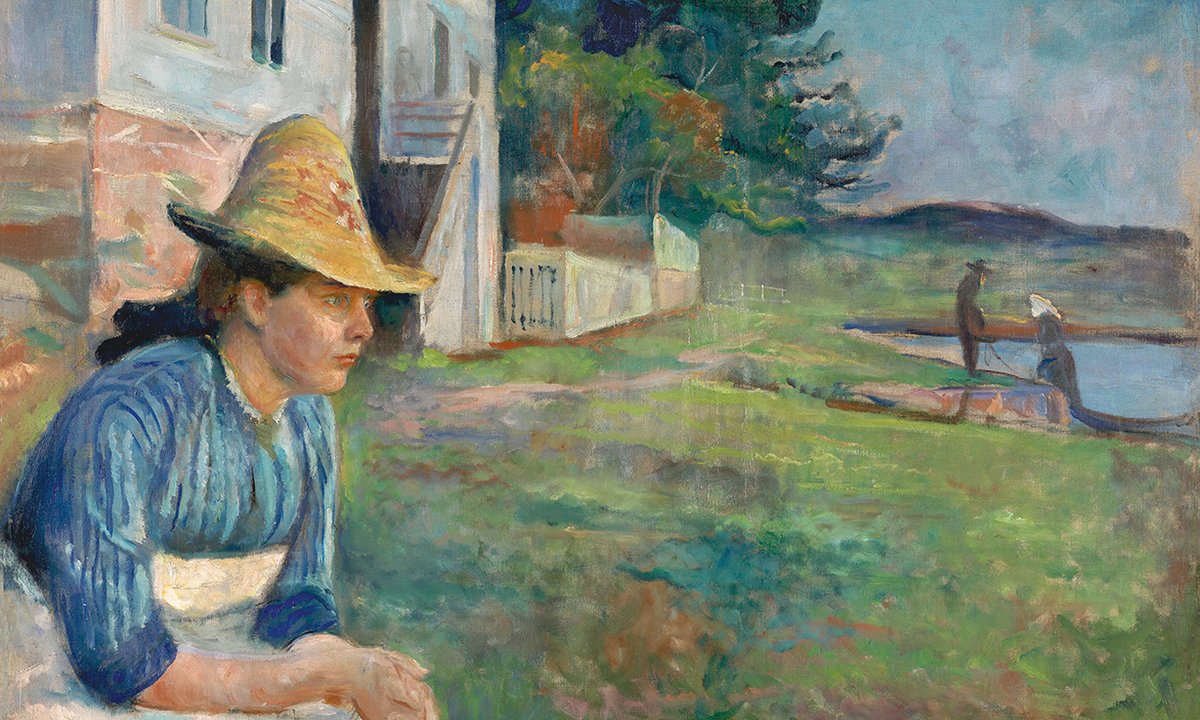
The household footage communicate to a difficult interval for Munch, who misplaced his mom and elder sister to tuberculosis earlier than he began to color in earnest, but in addition one in all intense creative progress. There are brooding, naturalistic renderings of figures akin to his aunt Karen, wearing black, her eyes solid down. Night (1888) depicts one other sister, Laura, gazing out throughout a grassy area, and exhibits him starting to have interaction with aesthetics that may outline his later observe. “You’ll be able to see he’s been taking a look at French artists, and he suggests the affect of Japanese artwork by squeezing Laura to the facet,” Smith says. “Her vacant gaze out of the image, in the meantime, anticipates Melancholy.”
That’s what you get for having your portrait performed by an excellent artist—you look extra like your self than you actually are
Walther Rathenau, industrialist and sitter for Munch
Behind the masks
A key exhibition theme will likely be Munch’s capacity to, in his personal phrases, see “behind everybody’s masks”. The rakish, condescending air he offers to his 1885 portrait of the artist Karl Jensen-Hjell, for instance, provoked outrage on the time. His 1907 depiction of the highly effective industrialist Walther Rathenau—a dramatic vertical canvas dominated by an imposing determine, cigar held confidently in a single hand and his footwear gleaming—shocked even its topic. “An terrible character, isn’t he?” Rathenau apparently mentioned. “That’s what you get for having your portrait performed by an excellent artist—you look extra like your self than you actually are.”
By the early twentieth century, Munch had change into one in all Europe’s hottest artists and a “canny businessman”, Smith says. However he was near his work, typically making a second model he would {photograph} himself beside and experiment with. “I believe there’s a fascination with the supernatural and the concept of everybody having a hidden self,” Smith says. “However I believe it’s additionally to do with how he felt so strongly that the photographs have been his youngsters, so discovered it very tough to half with them.”
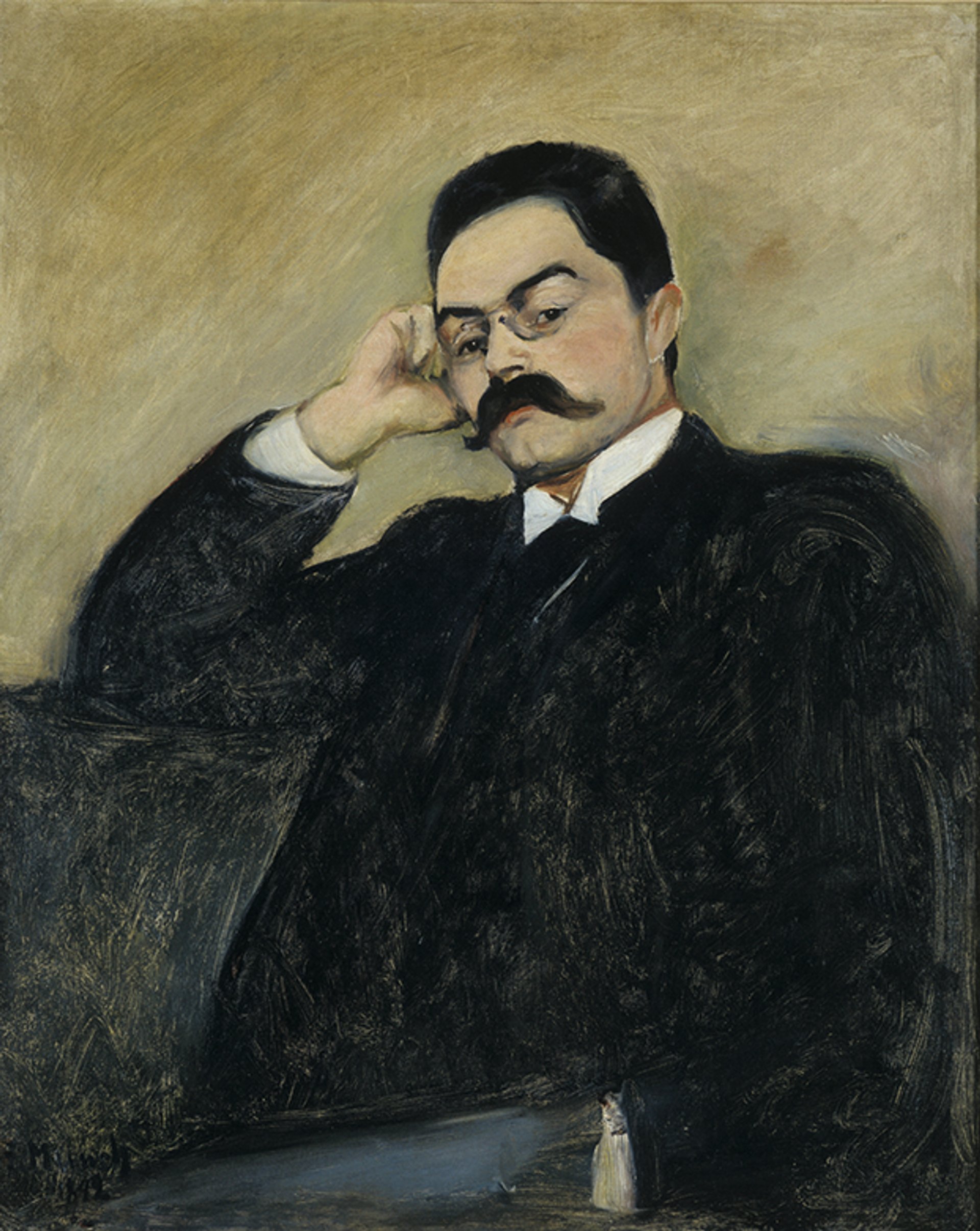
Hidden hug: a tiny couple seem low down in Munch’s Thor Lütken (1892) portray Picture: Munchmuseet/Sidsel de Jong
Additionally within the present are a number of self-portraits, utilized by Munch to discover the depths of his personal character. One other spotlight is an 1892 image of the lawyer Thor Lütken, which encompasses a hidden panorama on the sleeve of the sitter displaying two embracing figures.
From the bohemian Hans Jaeger to the psychiatrist Daniel Jacobson, these depicted within the present are individuals who not solely financed Munch but in addition impressed, helped and offered him with friendship. Smith thinks the exhibition celebrates them as a lot because the artist himself.
The present finally seeks to place Munch as a person who was not actually alone in any respect however linked—right through to his older years. “He was somebody who was a part of this glorious European community,” Smith says. “He was a cosmopolitan.”
• Edvard Munch Portraits, Nationwide Portrait Gallery, London, 13 March-15 June

