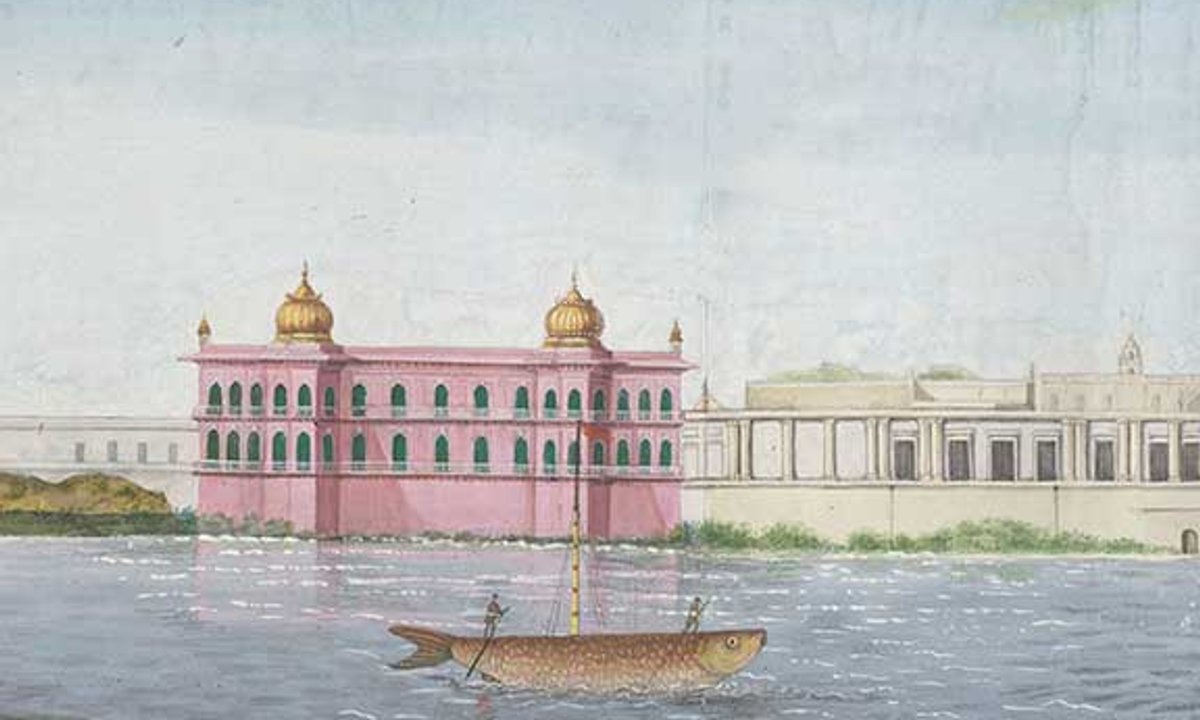
Following two years of conservation, a 37ft-long, early Nineteenth-century scroll is on public view for the primary time on the Yale Heart for British Artwork (YCBA) in New Haven, Connecticut. Generally known as the Lucknow scroll, the article is a part of the exhibition Painters, Ports and Income: Artists and the East India Firm, 1750-1850 (till 21 June), bringing questions of empire, commerce and creative trade into materials focus. Because of the scroll’s measurement and fragility, half of it will likely be exhibited at a time and unrolled over the course of the present, giving repeat guests an opportunity to see totally different sections. (Displaying the article in parts additionally helps cut back mild publicity.)
Scrolls vary in scale from handheld objects to ones even bigger than the Lucknow instance, they usually have served a wide range of functions. “Inside creative traditions on the Indian subcontinent, narrative scrolls had been fashionable types of artwork,” the exhibition curators Laurel O. Peterson and Holly Shaffer inform The Artwork Newspaper. “These had been made for individuals in any respect ranges of society. They usually inform devotional narratives, unfolding because the scroll is unrolled. In early Nineteenth-century Britain, scrolls had been used for leisure at residence and could be a memento.” Although printed in multiples, scrolls had been thought of luxurious objects.
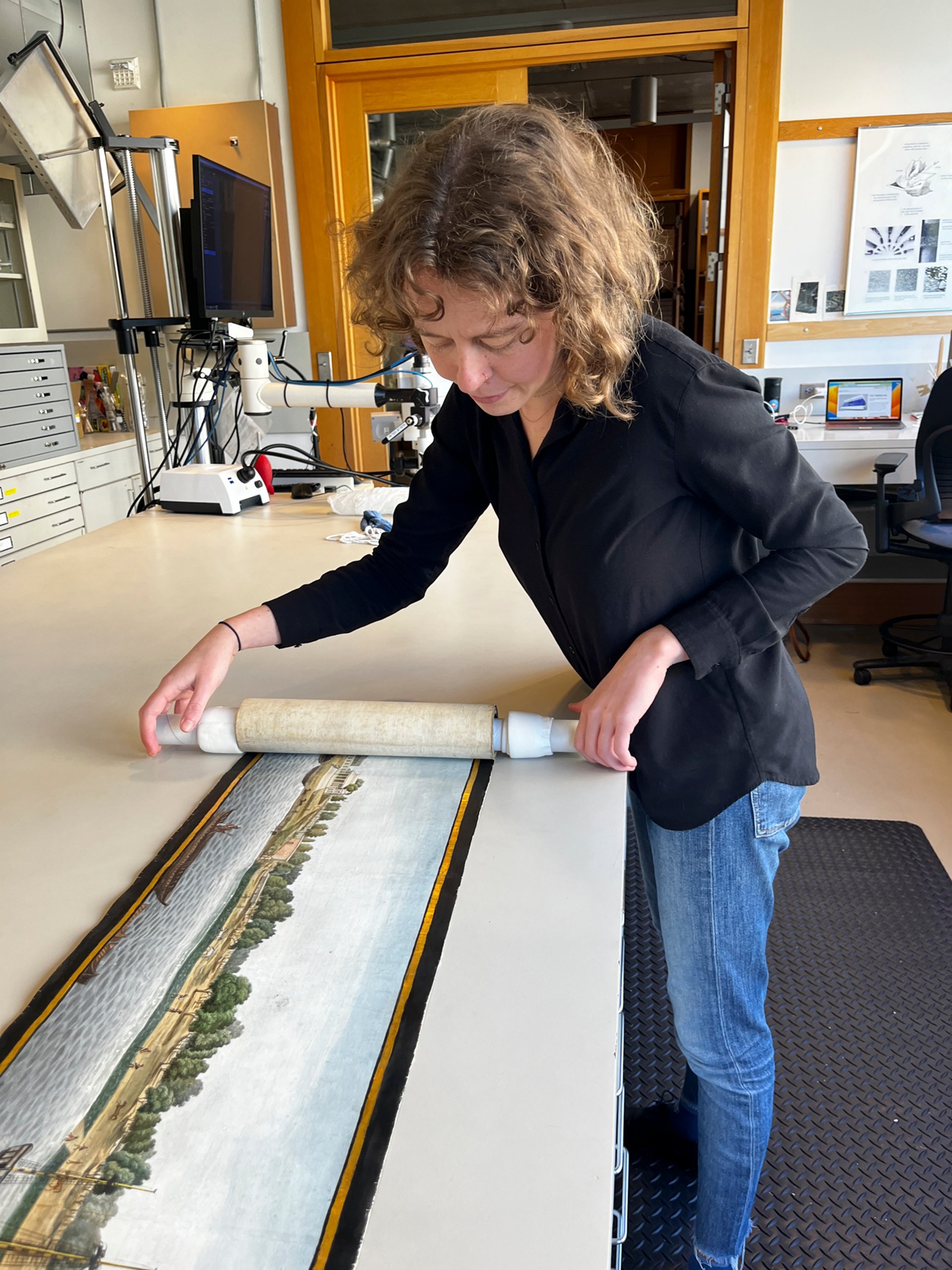
Emma Hartman, the assistant conservator of paper at Yale College Artwork Gallery, unrolling the Lucknow Scroll. Picture: Anita Dey, picture courtesy of the Yale Heart for British Artwork
The Lucknow scroll, or Lucknow from the Gomti, was made between 1821 and 1826 and contains 33 joined sheets of laid paper, executed in watercolour, gouache and gold. It provides an expansive view of Lucknow in northern India, as seen from throughout the Gomti River.
“We are able to take into consideration the Lucknow scroll when it comes to storytelling, because it permits the viewer to observe a journey alongside the banks of the river,” the curators say. “The English-language key written in 1826 describes the work as a ‘Panoramic View of Lucknow’, suggesting a hyperlink between the 2 types—however panoramas characterize the panorama from a set viewing level, reasonably than a steady one.”
From palaces to warehouses
Created throughout the reign of Ghazi-ud-Din Haidar Shah—who declared independence from the Mughal emperor in 1819 and launched into bold constructing campaigns—the scroll captures palaces and mosques, in addition to workshops, warehouses and vernacular constructions.
“The scroll has an interesting story each traditionally and materially, partially as a result of it’s so mysterious,” the curators say. “We don’t know the names of the artists who made it.” The patron can be unknown, they add, however its inscriptions “place little emphasis on the corporate, signalling that the scroll was possible made for, or in honour of, the ruler—maybe on the request of an elite lady in his retinue”. It may even have been a part of a navy or political negotiation.
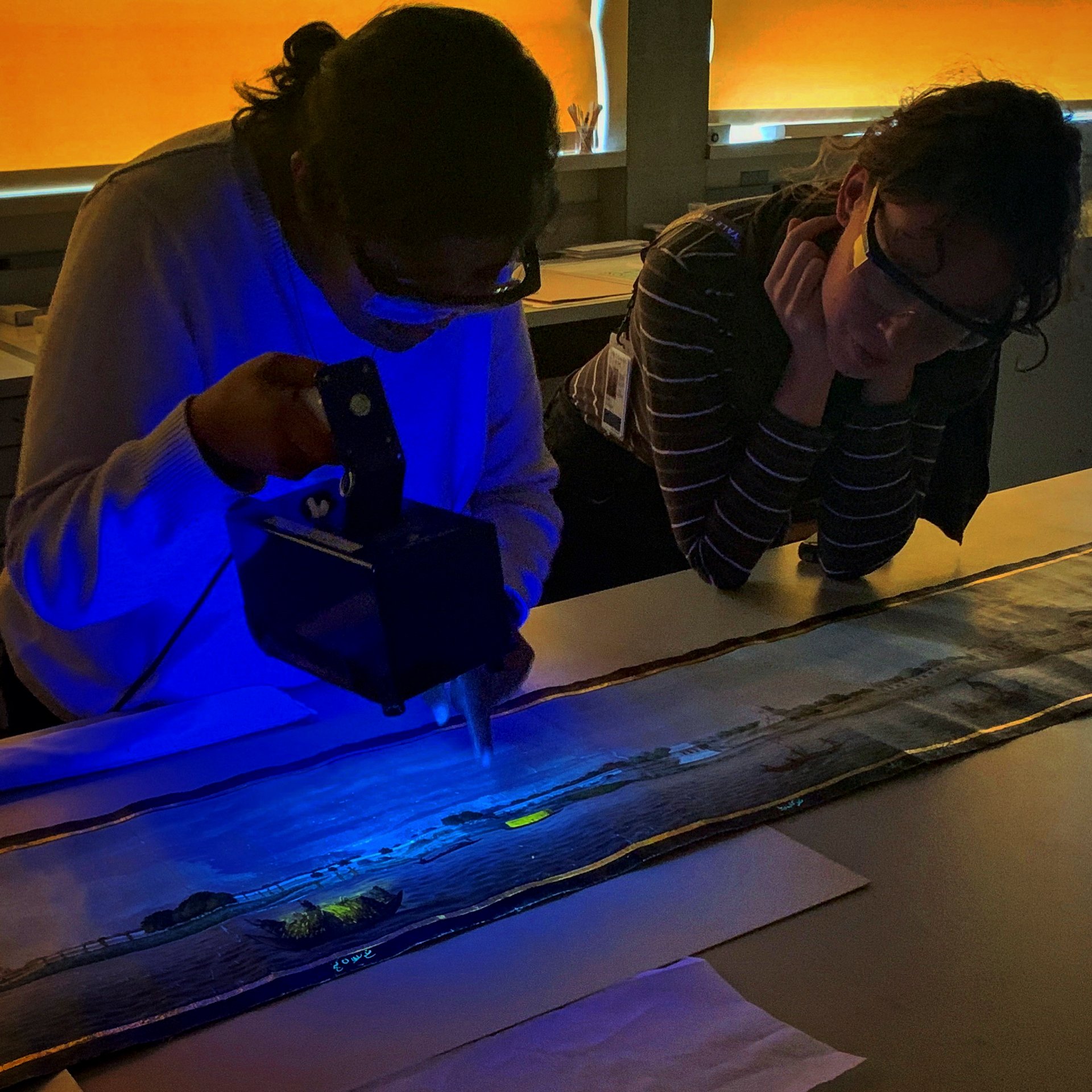
Anita Dey, the assistant paper conservator on the Yale Heart For British Artwork, and Emma Hartman, the assistant conservator of paper at Yale College Artwork Gallery, analyzing the Lucknow Scroll underneath ultraviolet mild. Picture: Jessica Makin, picture courtesy of the Yale Heart for British Artwork
Over time, the scroll developed areas of pigment instability and structural weak spot. “The first conservation challenges stemmed from the scroll’s complicated layered development,” says Anita Dey, the assistant paper conservator on the YCBA. “It’s composed of a number of sheets of paper joined along with subsequent linings of one other paper layer and a cotton-textile backing. Whereas this construction helped shield the scroll from put on related to dealing with by way of its lifetime, it additionally launched important planar distortions that prevented the article from mendacity flat as initially meant.”
Conservation remedy on the YCBA started with stabilisation to stop additional loss and flattening the article, making certain it could possibly be safely unrolled and displayed. Among the many noteworthy findings revealed throughout conservation was a watermark for the British mill of James Whatman, a discovery that helped slender the scroll’s date and perceive it inside broader commerce networks.
- Painters, Ports and Income: Artists and the East India Firm, 1750-1850, Yale Heart for British Artwork, till 21 June

